

How to tie a Christmas tree to your car, wrap the tree in netting, lay an old blanket on your roof, place the tree on top with the trunk facing the front of the car, and secure it with strong rope or ratchet straps tied to your roof rack. If you don’t have a roof rack, run the straps through the inside of the car with the doors open (never through the windows), then close the doors on them. Tug the tree hard from every side before you drive, and keep your speed low.
A tree that isn’t tied down well can slide off on the road and cause a crash, so it’s worth doing right. This guide explains both methods, what to bring to the tree lot and the mistakes that damage cars every December.
What to Bring Before You Buy the Tree
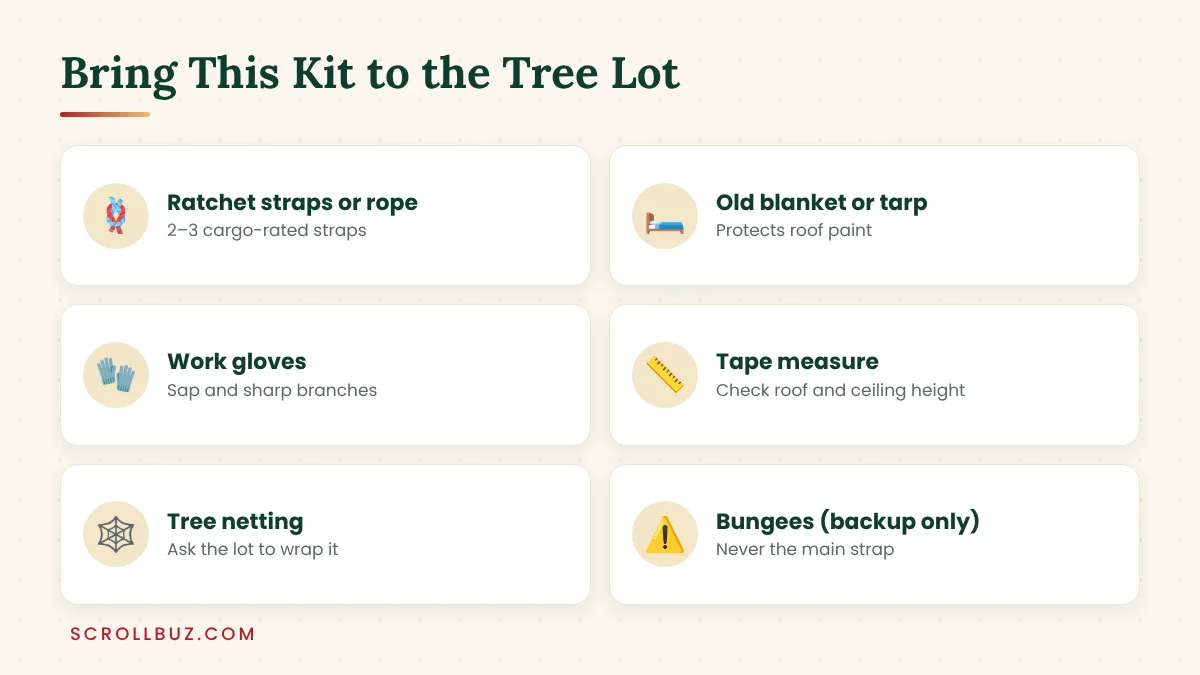
Many tree lots offer twine and netting, but twine is often too weak for highway wind. Bring your own kit:
- Two or three ratchet straps or strong rope (rated for cargo, not thin twine)
- An old blanket, moving pad or tarp to protect your roof
- Work gloves for handling sap-covered branches
- A tape measure to check your car’s roof length
- Bungee cords only as backup, never as the main strap
Step 1: Measure Your Car and Choose the Right Tree Size
Before you fall in love with a 9-foot tree, measure the length of your car’s roof. As a general rule, the tree shouldn’t hang far past the windshield in front or block your view, and it shouldn’t stick out a long way past the rear of the car.
Measure your ceiling height at home too. Most people forget the stand adds a few inches, and the top of the tree needs space for a star or angel.
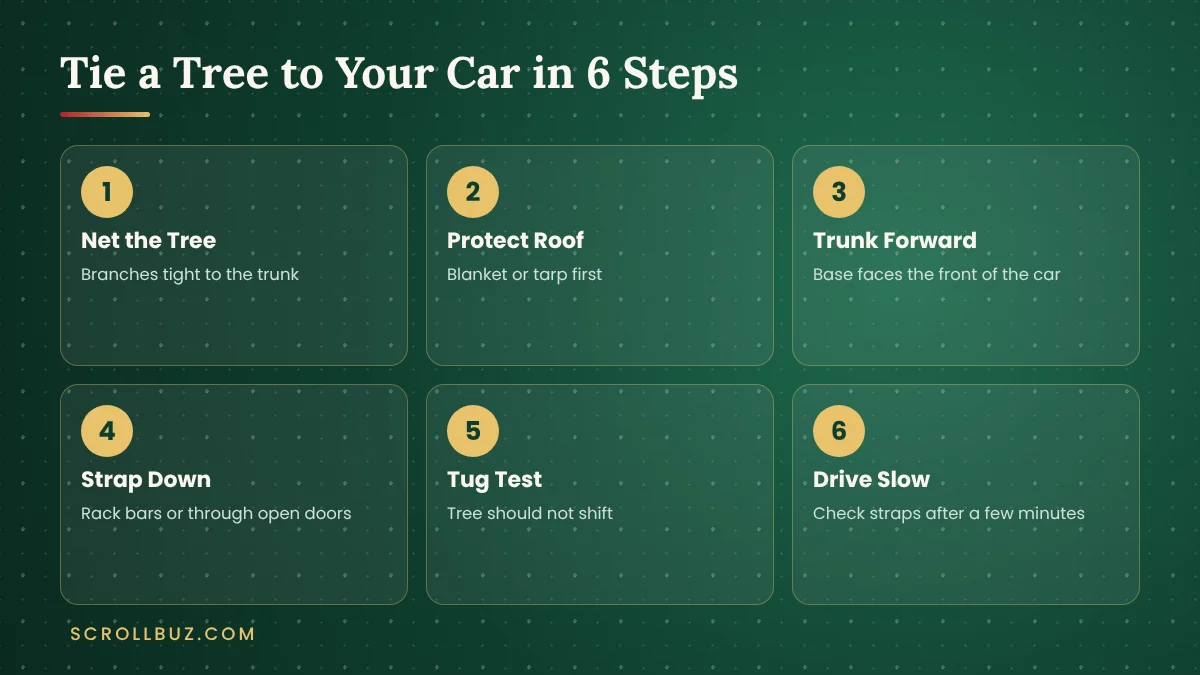
Step 2: Ask the Lot to Net the Tree
Most tree lots wrap trees in netting for free. Netting pulls the branches tight against the trunk, which:
- Cuts down wind resistance while you drive
- Protects branches from breaking
- Makes the tree much easier to carry and tie down
If they offer to make a fresh cut at the base, say yes. It helps the tree drink water once it’s home.
Step 3: Protect Your Car’s Roof
Lay an old blanket, moving pad or tarp across the roof. Tree needles, sap and rough bark can scratch paint and leave sticky marks that are hard to remove. If your car has a roof rack, place the blanket over the rack crossbars.
Step 4: Place the Tree Trunk-First Toward the Front
Lift the tree with a helper and lay it in the center of the roof, with the trunk pointing toward the front of the car. This matters more than most people realize:
- Branches angle backward, so wind flows over them instead of catching them like a sail.
- It reduces the chance the tree lifts or shifts while you drive.
- It protects the branches from damage.
Center the tree side to side so the weight is balanced.
Step 5A: How to Tie a Christmas Tree to your Car With a Roof Rack
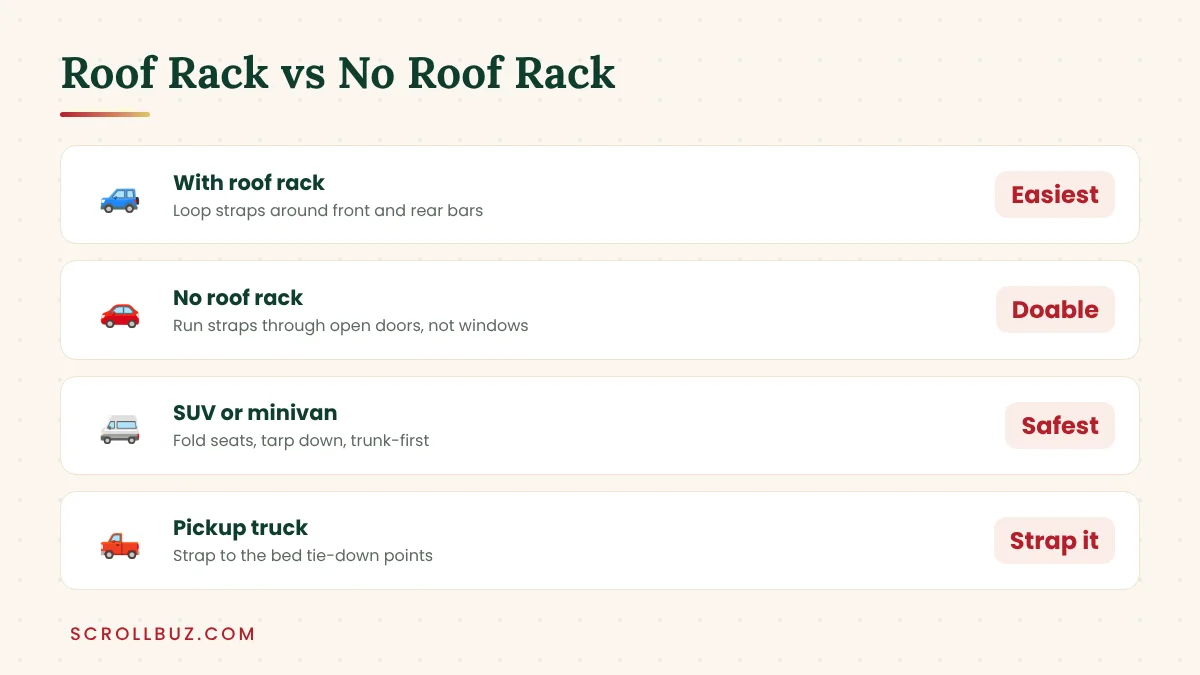
- Throw your first strap over the tree near the trunk end and loop it around the front crossbar.
- Tighten the strap until the tree presses firmly into the blanket.
- Do the same with a second strap near the middle or back of the tree, around the rear crossbar.
- Add a third strap lengthwise if possible, from the trunk to the back of the rack, to stop the tree sliding forward when you brake.
- Tuck in or tie off loose strap ends so they don’t flap and scratch the paint.
Step 5B: How to Tie a Christmas Tree to a Car Without a Roof Rack
- Open all the car doors (don’t use the windows).
- Throw the first strap over the tree near the trunk end.
- Pass both ends of the strap through the inside of the car, across the ceiling, and tie or ratchet them together inside the cabin.
- Repeat with a second strap near the back of the tree.
- Close the doors on the straps. The door seals hold the straps in place.
Why not the windows? If you run straps through open windows, you can’t close them, and the strap can rub or crack the window frame. Running straps through the door openings is safer and keeps the car sealed.
Important: With this method, the doors with straps through them won’t open normally until you untie the tree. Plan your trip home with that in mind, and make sure the driver’s door stays usable whenever possible.
Step 6: Do the “Tug Test”
Grab the tree firmly at the trunk and try to push it side to side and front to back. It should not shift or rock. If it moves, tighten the straps or add another one. Check that nothing blocks your windshield, side mirrors or rear window view.
Step 7: Drive Slowly and Check the Tree Early
- Use back roads when possible and avoid highways.
- Keep your speed low since wind pressure grows quickly at higher speeds.
- Brake gently to stop the tree from sliding forward.
- Pull over after the first few minutes to check that the straps are still tight.
- Watch for crosswinds on open roads and bridges.
Other Ways to Bring a Christmas Tree Home
Inside an SUV or Minivan
Fold down the rear seats, lay a tarp or old sheet down, and slide the tree in trunk-first toward the front seats. It’s often safer than the roof, but needles and sap get everywhere. Our guide on how to clean car seats can help if sap ends up on your upholstery.
In a Pickup Truck Bed
Lay the tree in the bed with the trunk toward the cab, then strap it down to the truck’s tie-down points. An unsecured tree can blow out of a truck bed at speed.
Use Delivery
Many tree lots and garden centers deliver for a small fee. If your car is small or you don’t have straps, delivery may be worth it.
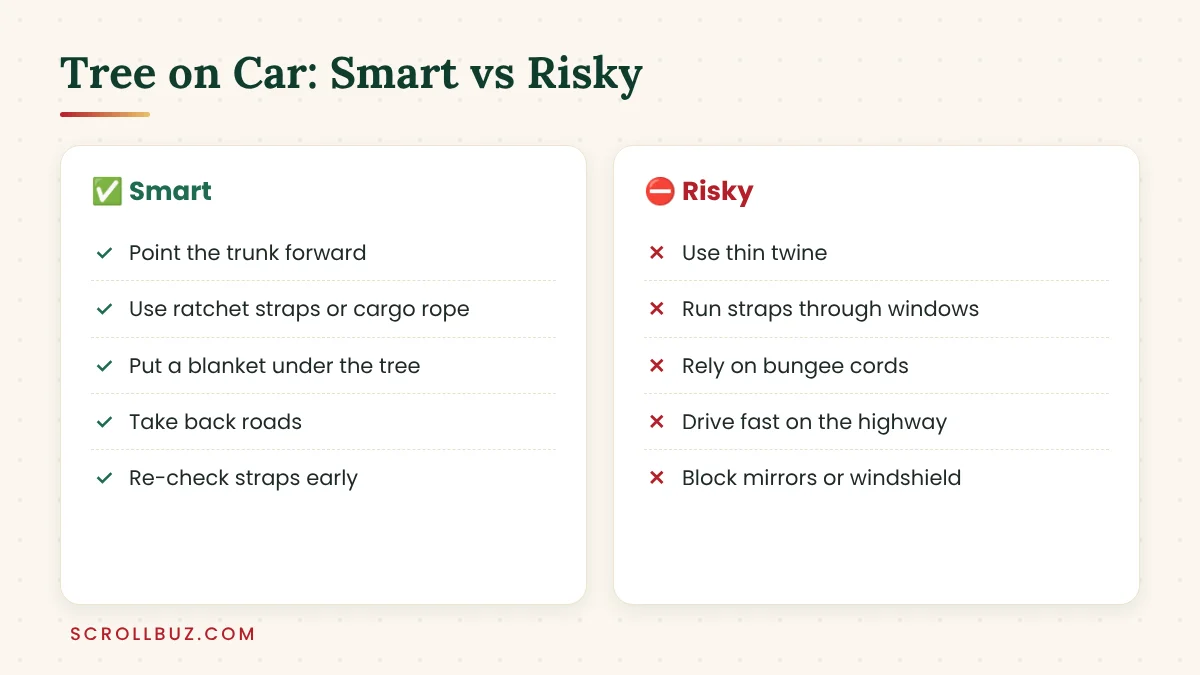
Common Mistakes That Damage Cars (and Trees)
- Using thin twine that stretches or snaps in the wind
- Placing the trunk toward the back, so branches catch air
- Skipping the blanket and scratching the roof paint
- Tying straps through windows
- Using bungee cords as the main strap
- Driving fast on the highway with a tree on top
- Not checking the tree after the first few miles
Prep Your Car for Holiday Trips
Picking up a tree is often the first holiday drive of the season. Before longer trips to see family, check the basics: check your oil level, make sure your battery is healthy (a battery warning light is a sign to get it tested before winter) and confirm your spare tire is inflated. Knowing how far you can drive on a spare tire can save you on a long holiday drive.
Frequently Asked Questions
Which way should a Christmas tree face on top of a car?
The trunk should face the front of the car. This lets air flow over the branches instead of catching them, which keeps the tree steadier and protects the branches.
Can you put a Christmas tree on a car without a roof rack?
Yes. Lay a blanket on the roof, place the tree on top and run strong straps through the open car doors, across the inside ceiling, then tie them together inside and close the doors.
Is twine strong enough to tie down a Christmas tree?
Thin twine often stretches or breaks in the wind. Ratchet straps or strong cargo rope are much safer, especially for larger trees or longer drives.
How fast can you drive with a Christmas tree on your car?
Drive slowly and avoid highways when you can. Lower speeds mean less wind pressure on the tree and straps, and less risk of the tree shifting.
Will a Christmas tree scratch my car roof?
It can. Sap, bark and needles can scratch paint and leave sticky marks. Always place an old blanket or tarp under the tree to protect the roof.
Final Thoughts
Knowing how to tie a Christmas tree to your car comes down to four things: protect the roof, point the trunk forward, use real straps and drive slowly. Do a quick tug test before you leave and check the tree after a few minutes on the road. Your tree, your car and everyone else on the road will get home safely.