
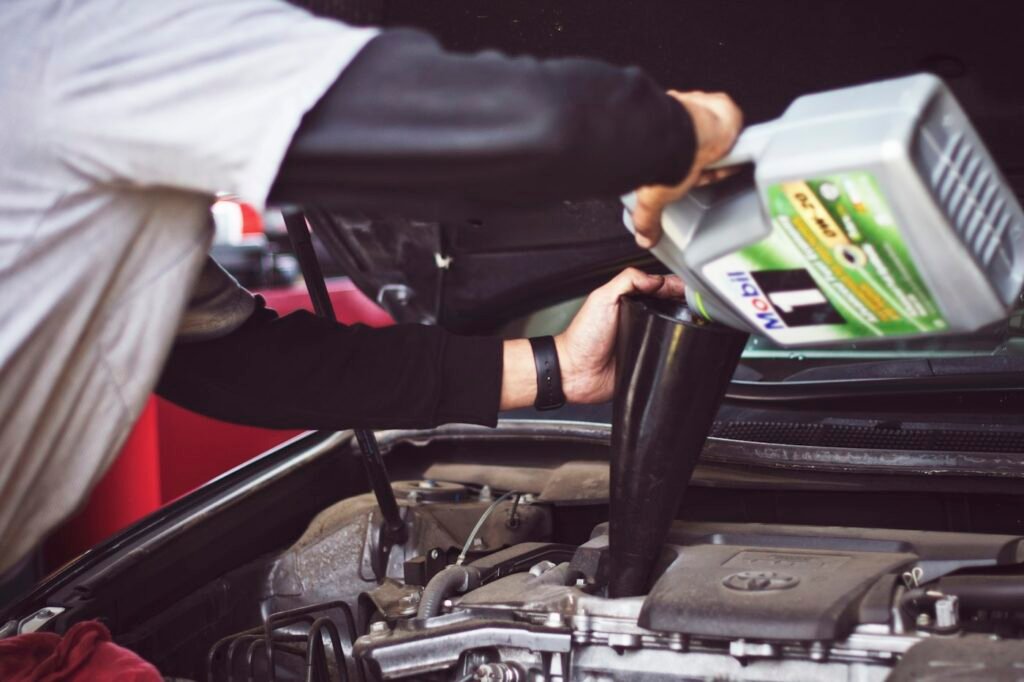

Checking your engine oil is one of the simplest car maintenance jobs you can do, and one of the most important. Low or dirty oil is a common cause of engine wear, and the repairs that follow are expensive. The whole check takes about five minutes, and you don’t need any tools beyond a paper towel.
Here’s exactly how to check oil level in your car, what the dipstick is telling you, and what to do if the oil is low or looks wrong.
Why Checking Your Oil Matters
Motor oil lubricates the moving parts inside your engine, reduces friction, carries away heat and traps tiny bits of debris. When oil runs low, metal parts rub together with less protection. Over time, that leads to overheating, knocking noises and, in the worst cases, serious engine damage.
Many engines also burn or leak small amounts of oil between changes, especially as they get older. A quick check every few weeks catches a problem before it becomes a big repair bill.
When to Check Your Oil
A good rule of thumb is to check your oil:
- Once a month for most cars
- Every other fill-up if your car is older or has high mileage
- Before any long road trip
- Any time the oil warning light comes on
- If you notice burning smells, smoke or oil spots under your car
Check your owner’s manual too. Some manufacturers recommend checking with the engine warm, and a few newer cars don’t have a traditional dipstick at all (more on that below).
What You’ll Need
- A paper towel or lint-free rag
- Gloves (optional, but they keep your hands clean)
- A flashlight if it’s dark
- The correct type of motor oil, in case you need to top up
Step-by-Step: How to Check Oil Level in Your Car
1. Park on Level Ground
Park on a flat surface so the oil settles evenly in the oil pan. If the car is tilted, the dipstick reading won’t be accurate.
2. Let the Engine Cool
Turn off the engine and wait about 5 to 10 minutes. This lets oil drain back down into the pan and keeps you from touching hot engine parts. If your manual says to check while warm, follow that, just be careful.
3. Open the Hood and Find the Dipstick
Pop the hood release inside the car, then lift the hood and secure it with the prop rod. The dipstick usually has a bright yellow or orange loop handle, often marked with an oil can symbol. Don’t confuse it with the transmission fluid dipstick, which is sometimes red and usually located further back.
4. Pull It Out and Wipe It Clean
Pull the dipstick all the way out and wipe it with your paper towel. The first reading isn’t reliable because oil splashes up the tube while the engine runs.
5. Reinsert and Pull Again
Push the dipstick all the way back in until it’s fully seated, then pull it out again. Now look at where the oil film stops on the end of the stick.
6. Read the Level
At the tip of the dipstick, you’ll see two marks. They might be small holes, lines, letters (L and H, or MIN and MAX) or a crosshatched area.
- Between the marks: Your oil level is fine.
- At or below the lower mark: Your oil is low and needs topping up.
- Above the upper mark: There’s too much oil, which can also cause problems.
The space between the two marks is usually about one quart (roughly one liter).
7. Put the Dipstick Back
Slide the dipstick fully back into its tube and close the hood firmly.
How to Read Oil Color and Condition
The dipstick tells you more than just the level. Look at the oil and rub a drop between your fingers.
| What You See | What It Usually Means | What to Do |
|---|---|---|
| Amber or light brown, clear | Healthy oil | Nothing, keep checking regularly |
| Dark brown or black | Older oil with built-up deposits | Check your service schedule; an oil change may be due |
| Gritty or sludgy texture | Dirt or sludge buildup | Get an oil change soon |
| Milky or foamy, light tan | Possible coolant leak into oil | See a mechanic right away |
| Metal flecks or shiny particles | Possible internal wear | Have the engine inspected |
Keep in mind that diesel engine oil often turns dark quickly, so color alone isn’t the whole story for diesel owners. Follow your service interval.
How to Top Up Engine Oil
If the level is at or near the lower mark, add oil:
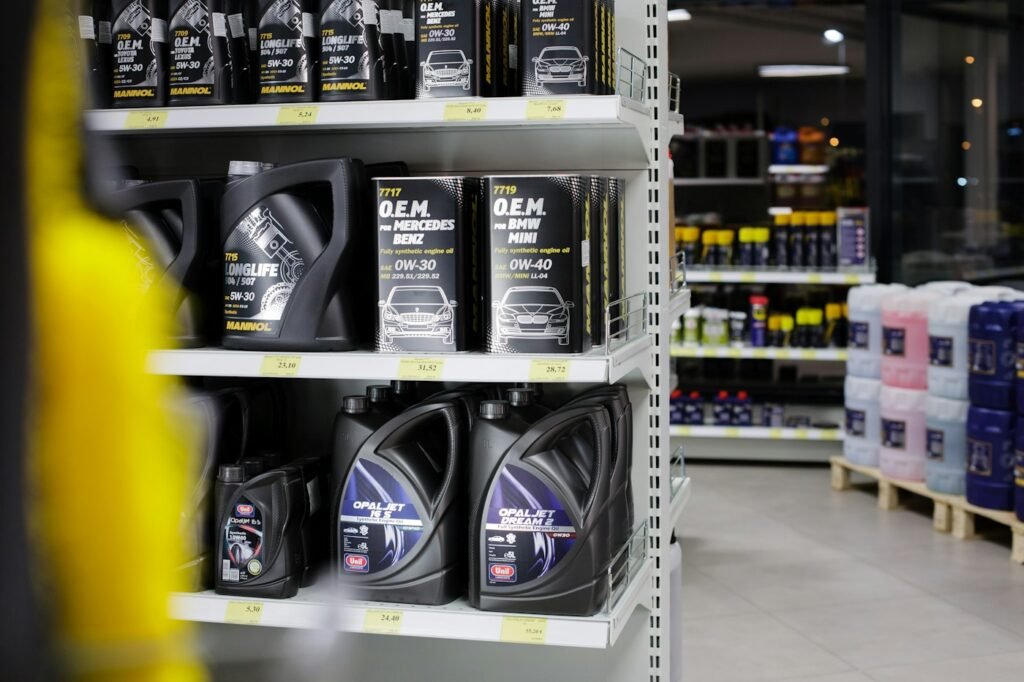
- Check your owner’s manual for the correct oil type and viscosity, such as 0W-20 or 5W-30. It’s also often printed on the oil filler cap.
- Find the oil filler cap on top of the engine. It usually has an oil can symbol.
- Remove the cap and place a funnel in the opening.
- Add a little at a time. Pour about half a quart, wait a minute, then recheck the dipstick. It’s easy to overfill if you pour too fast.
- Stop once the level is near the upper mark. Replace the cap tightly.
Overfilling isn’t harmless. Too much oil can get whipped into foam by the crankshaft, which reduces lubrication and can damage seals. If you overfill by a lot, it’s worth having some drained.
What If Your Car Doesn’t Have a Dipstick?
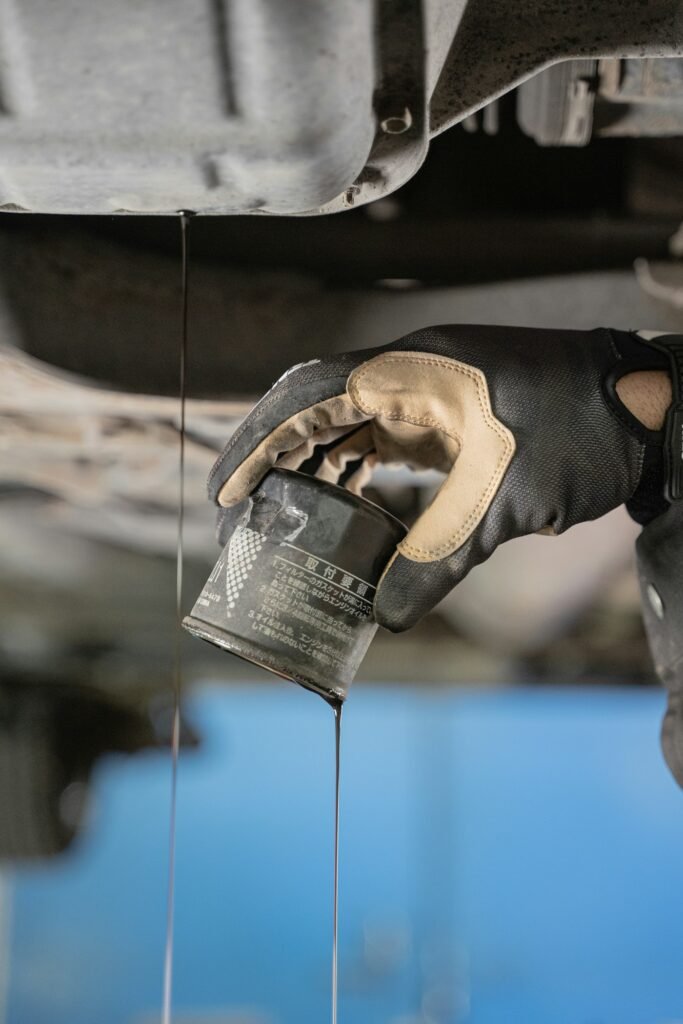
Some newer cars, including certain BMW, Mercedes-Benz and Audi models, use an electronic oil level sensor instead of a dipstick. In those cars, you check the oil level through the dashboard screen or infotainment menu. Usually the car needs to be on level ground with the engine warm, and the system takes a minute or two to measure. Your owner’s manual will have the exact steps.
Signs Your Car Is Losing Oil
If you have to top up often, something may be going on. Watch for:
- Oil spots or puddles where you park
- A burning oil smell, especially after driving
- Blue-gray smoke from the exhaust
- The oil pressure warning light flickering or staying on
- Ticking or knocking sounds from the engine
Some oil use is normal, especially in high-mileage engines. But if you’re adding more than about a quart every 1,000 miles, have a mechanic look at it. Engine problems can also show up as vibration, so if you notice shaking too, our guide on why your car shakes when accelerating can help you narrow down the cause.
How Often Should You Change Your Oil?
Checking oil is different from changing it. Many modern cars using synthetic oil can go 5,000 to 10,000 miles between changes, while older cars or those on conventional oil may need it every 3,000 to 5,000 miles. Your owner’s manual and the car’s oil life monitor are the best guides. If you do a lot of short trips, towing or driving in extreme heat, change it sooner.
Frequently Asked Questions
Should I check oil when the engine is hot or cold?
Most manufacturers recommend checking with the engine off and slightly warm, after it has sat for 5 to 10 minutes. Checking a completely cold engine is fine too and gives an accurate reading. Always follow your owner’s manual.
Is it bad to drive with low oil?
Yes. Driving with low oil reduces lubrication and increases engine wear and heat. If the oil pressure warning light comes on, pull over safely and turn off the engine as soon as possible.
Can I mix different brands of oil?
Yes, as long as the viscosity and specification match what your manual recommends. Mixing brands won’t hurt your engine in an emergency top-up.
How much oil should I add if it’s low?
Start with half a quart, then recheck. The gap between the low and full marks is usually about one quart, so you rarely need more than that.
Final Thoughts
Now that you know how to check oil level in your car, make it a habit. Park on level ground, wipe the dipstick, reinsert it, and read the level between the two marks. Top up slowly with the right oil, and watch the color for signs of trouble. Five minutes once a month is a small price for a healthier engine and fewer surprise repair bills.



Pingback: Battery Light On In Car? What It Means, 7 Causes And What To Do
Pingback: How To Defrost Car Windows Fast (Inside & Outside): 8 Methods
Pingback: How To Tie A Christmas Tree To Your Car