

A fresh Christmas tree makes the whole house smell like a forest, but only if it stays green. A tree that dries out in two weeks drops needles everywhere, looks sad in photos and becomes a real fire risk. The good news is that it is easy to keep a Christmas tree alive and fresh through New Year’s when you know what actually works.
This guide covers how to keep a Christmas tree alive from the lot to the living room, how much water it really needs, which home remedies are myths, and how to rescue a tree that has stopped drinking. You will also find a daily care checklist and a quick guide to the longest-lasting tree types.
Quick answer: To keep a Christmas tree alive, cut half an inch to an inch off the trunk right before you put it in the stand, use a stand that holds at least one quart of water per inch of trunk width, keep the water above the cut at all times, and place the tree away from heaters, fireplaces and sunny windows. Plain tap water works best; additives are not needed.
Why Christmas Trees Dry Out
A cut tree is still able to drink water through its trunk for weeks. Problems start when that water path gets blocked. When the cut end is exposed to air for several hours, sap seals over the wood like a scab. After that, the tree cannot drink, even if the stand is full. Warm, dry indoor air then pulls moisture from the needles faster than the tree can replace it.
So the whole trick to keep a Christmas tree alive comes down to three things: a fresh cut, constant water and a cool spot.
Step 1: Choose a Fresh Tree
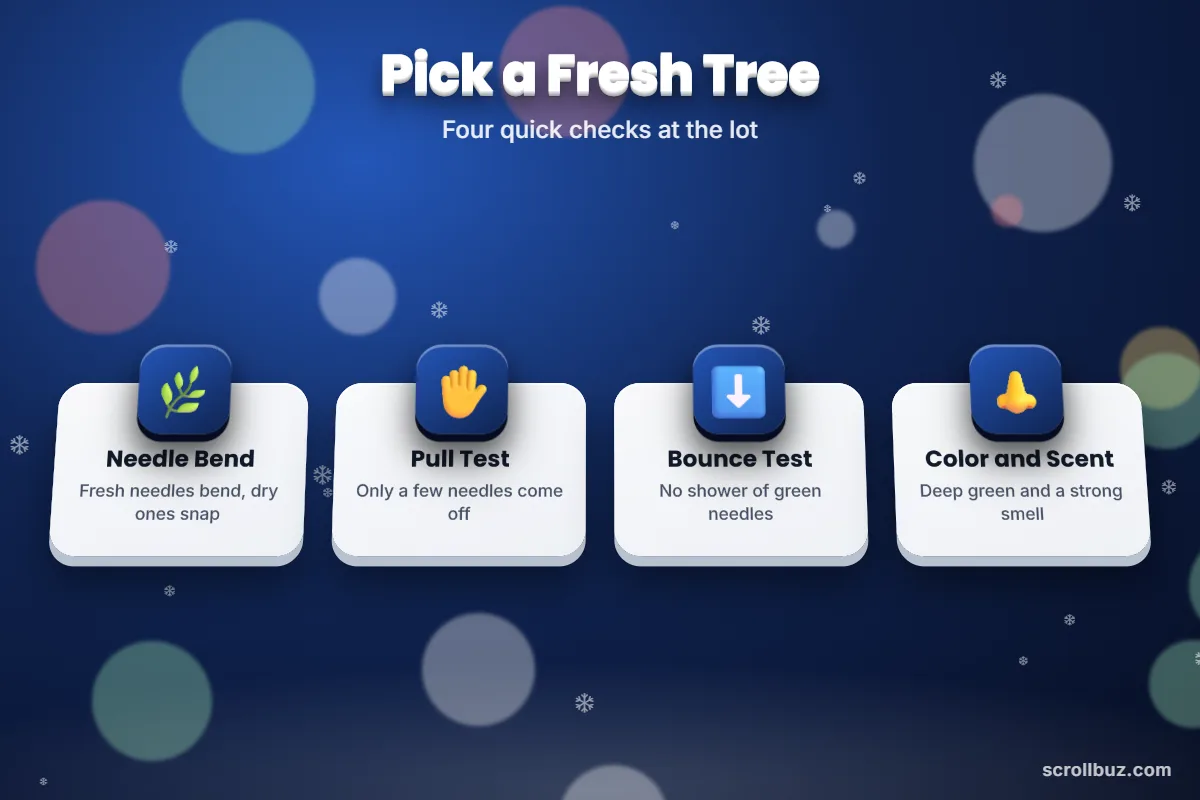
The fresher your tree is on day one, the easier it is to keep that Christmas tree alive. Do these quick checks at the lot:
- Needle bend test: Bend a needle between your fingers. Fresh fir needles bend; dry ones snap.
- Pull test: Gently run your hand along a branch toward you. Only a few needles should come off.
- Bounce test: Lift the tree a few inches and tap the trunk on the ground. A shower of green needles is a bad sign. A few brown inner needles are normal.
- Color and smell: Look for deep green color and a strong fresh scent.
Cutting your own tree at a farm gives you the freshest possible start. Bringing it home safely matters too; see our guide on how to tie a Christmas tree to your car.
Which Trees Last the Longest?
| Tree Type | Needle Retention | Notes |
|---|---|---|
| Fraser fir | Excellent | Strong branches for heavy ornaments, nice scent |
| Noble fir | Excellent | Stiff branches, lasts a long time |
| Nordmann fir | Excellent | Very low needle drop, soft needles |
| Balsam fir | Good | Classic Christmas smell |
| Douglas fir | Good | Full shape, sweet scent, softer branches |
| Scotch pine | Very good | Holds needles even when dry, but prickly |
| Blue or Norway spruce | Fair | Beautiful color but drops needles sooner |
Step 2: Make a Fresh Cut
This is the step most people skip, and it is the most important way to keep a Christmas tree alive. Right before the tree goes into the stand, cut a straight disk of half an inch to an inch off the bottom of the trunk. A straight cut is better than a V or angled cut, because it sits flat and holds water more evenly. Do not drill holes in the trunk or shave off the bark, which can make it harder for the tree to drink.
Get the tree into water within a few hours of the cut. If you cannot set it up right away, stand it in a bucket of water in a cool garage or shaded porch.

Step 3: Use the Right Stand and Water
A small stand is the most common reason people fail to keep a Christmas tree alive. The general rule is one quart of water for every inch of trunk diameter. A tree with a 5-inch trunk needs a stand that holds at least 5 quarts, or about 1.25 gallons.
- Fill it right away. A fresh tree can drink a gallon or more in the first day.
- Check twice a day for the first week. Morning and evening checks catch a dry stand before the cut seals.
- Never let the water drop below the trunk. If it does, the base can seal within hours.
- Use plain tap water. It is all the tree needs.
A long-spout watering can or a funnel with a tube makes it easy to fill the stand without crawling under the branches. Some people use a simple water level alarm that beeps when the stand gets low.
Do Sugar, Aspirin or Bleach Help?
You have probably heard that adding sugar, aspirin, soda, vodka or bleach to the water will keep a Christmas tree alive longer. Tree growers and university studies have found that these additives do not help, and some can make things worse by encouraging bacteria or slowing water uptake. Commercial tree preservatives are also not needed. Fresh, plain water and a fresh cut do the real work.
Step 4: Pick the Right Spot
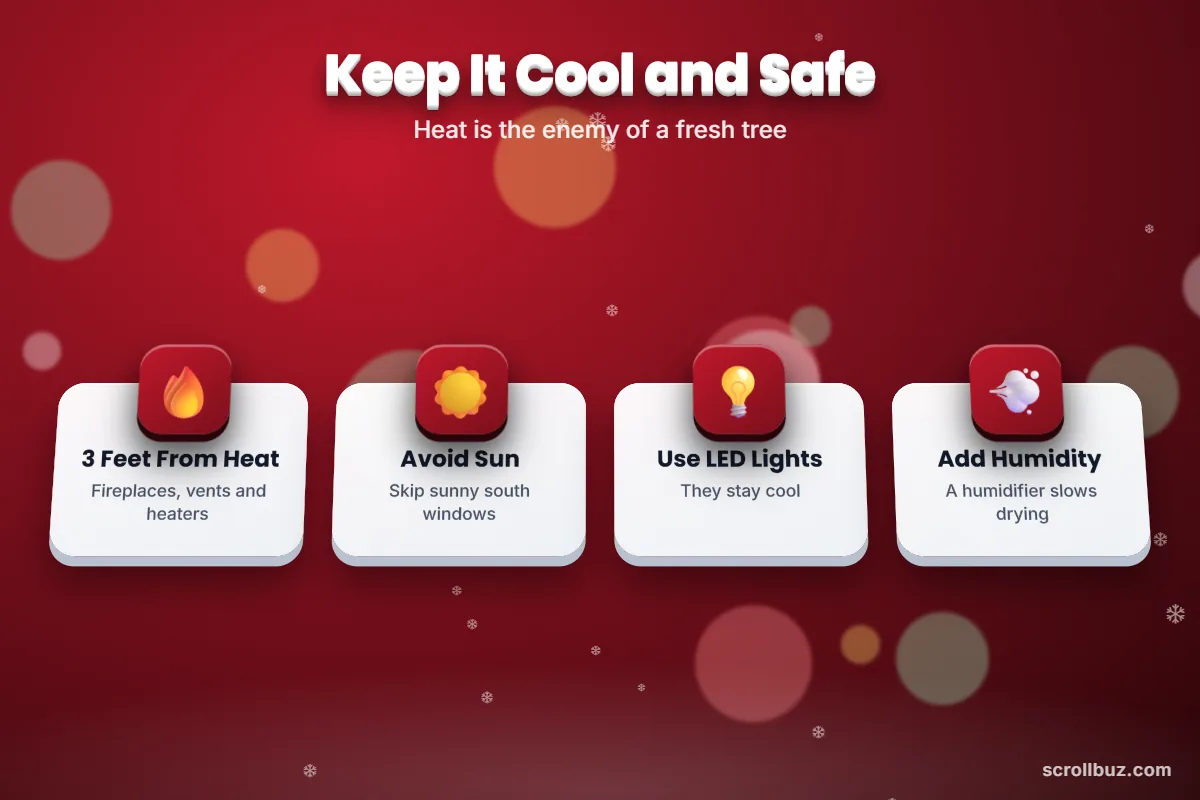
Heat is the enemy when you want to keep a Christmas tree alive. Place your tree:
- At least three feet from fireplaces, radiators, space heaters and heating vents
- Away from sunny south-facing windows
- Out of busy walkways where it can be bumped
Lowering your thermostat a degree or two and running a humidifier nearby also slows drying. A cooler room helps keep your Christmas tree alive for weeks longer.
Step 5: Use Cool LED Lights
Lights matter more than you think if you want your Christmas tree alive and green in late December. Old incandescent bulbs give off heat that dries needles. LED lights stay cool, use far less power and are much safer on a real tree. Check every strand for broken bulbs or frayed wires before you hang them, and turn the lights off when you go to bed or leave the house. If a strand is acting up, our guide on how to fix Christmas lights can help.
Daily Care Checklist
- Check the water level every morning and evening.
- Top up with plain water so the trunk is always covered.
- Feel a few needles. They should be soft and bend, not snap.
- Look for brown branches near heat sources and move the tree if needed.
- Turn off lights when you leave or sleep.
- Sweep up fallen needles so you can spot heavy drops early.
How to Revive a Christmas Tree That Stopped Drinking
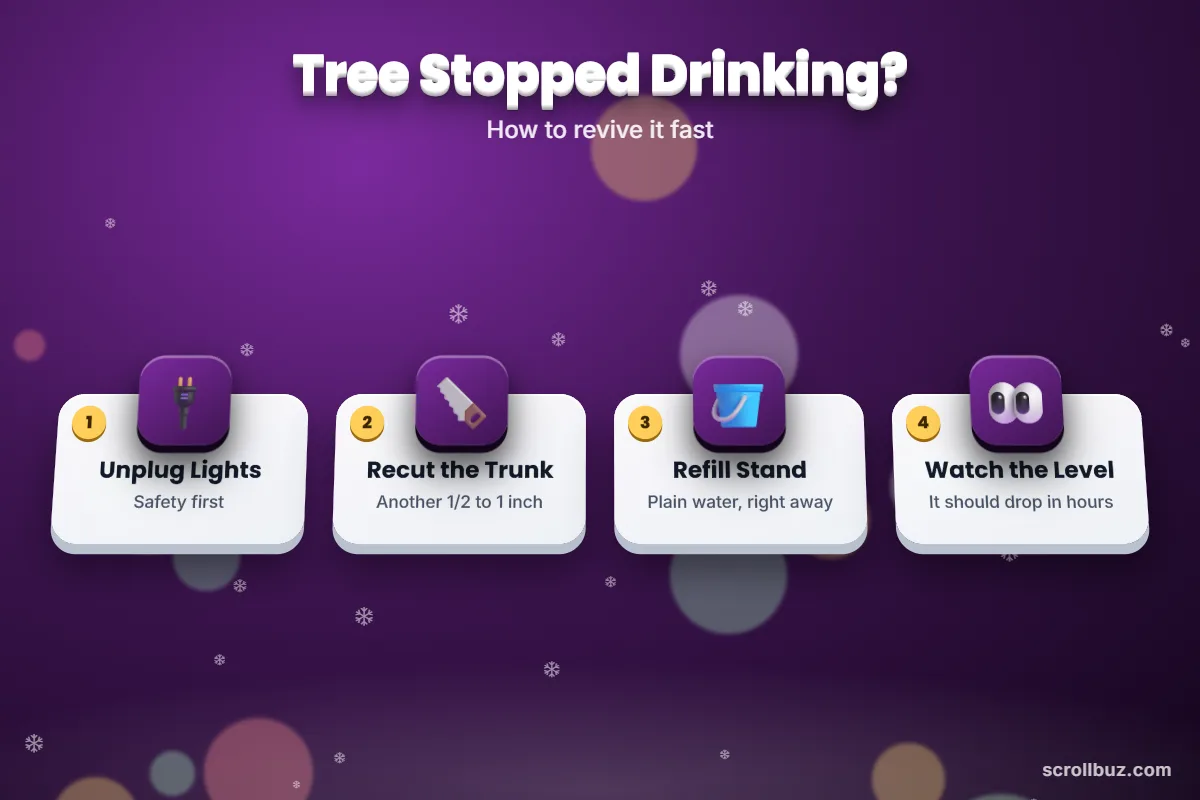
If the water level has not dropped in a day or two, the base may have sealed. Here is how to try to bring it back and keep your Christmas tree alive a little longer:
- Unplug the lights and carefully take the tree out of the stand with a helper.
- Cut another half inch to an inch off the bottom of the trunk.
- Put it straight back into a full stand of plain water.
- Watch the level for the next few hours. It should start dropping again.
If the needles are brittle, fall off when touched or the branches droop and feel dry, the tree is past saving. At that point, take it down. A dry tree can catch fire and burn extremely fast, so safety comes first.
Fire Safety Tips
- Keep the Christmas tree alive and well watered; a hydrated tree is much harder to ignite.
- Never place candles on or near the tree.
- Do not overload outlets or connect too many light strands end to end.
- Test your smoke detectors before the holidays.
- Remove the tree soon after the holidays or once it gets dry.
How Long Does a Real Christmas Tree Last?
With good care, most fresh-cut trees stay green for about four to five weeks indoors. Firs often last longer than spruces. If you buy right after Thanksgiving, good care should keep a Christmas tree alive until about New Year’s Day. Trees bought from a lot may have been cut weeks earlier, which is why the fresh cut at home matters so much.
What About Potted Living Trees?
If you want to plant your tree later, buy a potted or balled tree. Keep it indoors for no more than 7 to 10 days, in the coolest spot possible, with moist soil. Move it to a garage for a few days before planting outside, so it adjusts to the cold gradually.
Frequently Asked Questions
How often should I water my Christmas tree?
To keep a Christmas tree alive, check it every day, and twice a day in the first week. Add water whenever the level gets close to the bottom of the trunk.
Should I use hot or cold water?
Plain tap water at room temperature is fine. Some growers suggest warm water for the first fill, but there is no strong evidence it matters. Keeping the stand full matters far more.
Why is my tree not drinking water?
The cut end has probably sealed with sap because it was exposed to air too long or the stand ran dry. Make a fresh cut and refill the stand right away.
Can I keep a Christmas tree alive without a stand?
Yes, for a short time, by standing it in a bucket of water with rocks or bricks for support. A proper stand with a large water bowl is safer and makes it far easier to keep your Christmas tree alive.
Final Thoughts
It is simple to keep a Christmas tree alive once you know the rules: start with a fresh tree, make a fresh cut, keep the stand full, skip the additives and keep it cool. Spend one minute a day on care and your tree will look full, green and fragrant from the first ornament to the last day of the season. Planning to go artificial next year? Here is how to clean an artificial Christmas tree.