
How to Clean a Stainless Steel Sink: 5 Easy Methods (Plus Shine Tips)
How to Clean a Stainless Steel Sink looks amazing when it’s clean and sad when it’s covered in water spots, food film and dull streaks. The good news? You don’t need fancy products. Most of what you need to clean a stainless steel sink is already in your kitchen.
This guide walks you through a quick daily wipe, a weekly deep clean, and specific fixes for hard water spots, rust stains and light scratches. You’ll also learn the mistakes that damage stainless steel, so your sink stays bright for years.
What You’ll Need
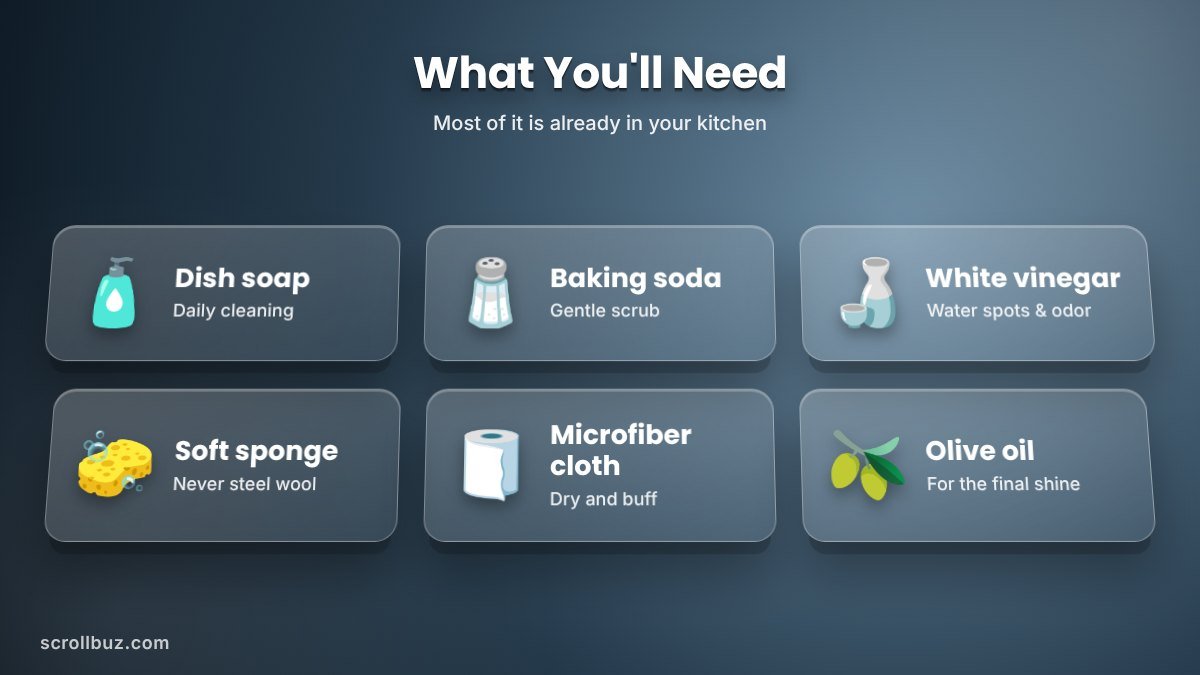
- Dish soap
- Baking soda
- White vinegar in a spray bottle
- A soft sponge or non-scratch scrub pad
- Microfiber cloths
- An old toothbrush
- Olive oil or mineral oil (for shine)
- Optional: Bar Keepers Friend or a cream cleanser made for stainless steel
Before You Start: Find the Grain
Before you clean a stainless steel sink, look closely at your sink and you’ll see faint lines running in one direction. That’s the grain. Always scrub and wipe with the grain, not in circles. Going against it can leave tiny scratches that collect dirt and look dull.
Method 1: Daily Clean With Dish Soap
The fastest way How to Clean a Stainless Steel Sink every day takes about two minutes.
- Rinse out food bits and empty the drain strainer.
- Add a few drops of dish soap to a wet sponge.
- Wipe the basin, sides and faucet base with the grain.
- Rinse with warm water.
- Dry with a microfiber cloth to prevent water spots.
Drying is the step most people skip, and it’s the one that makes the biggest difference.
Method 2: Deep Clean With Baking Soda and Vinegar
Once a week, use this method how to clean a stainless steel sink more deeply and freshen the drain.
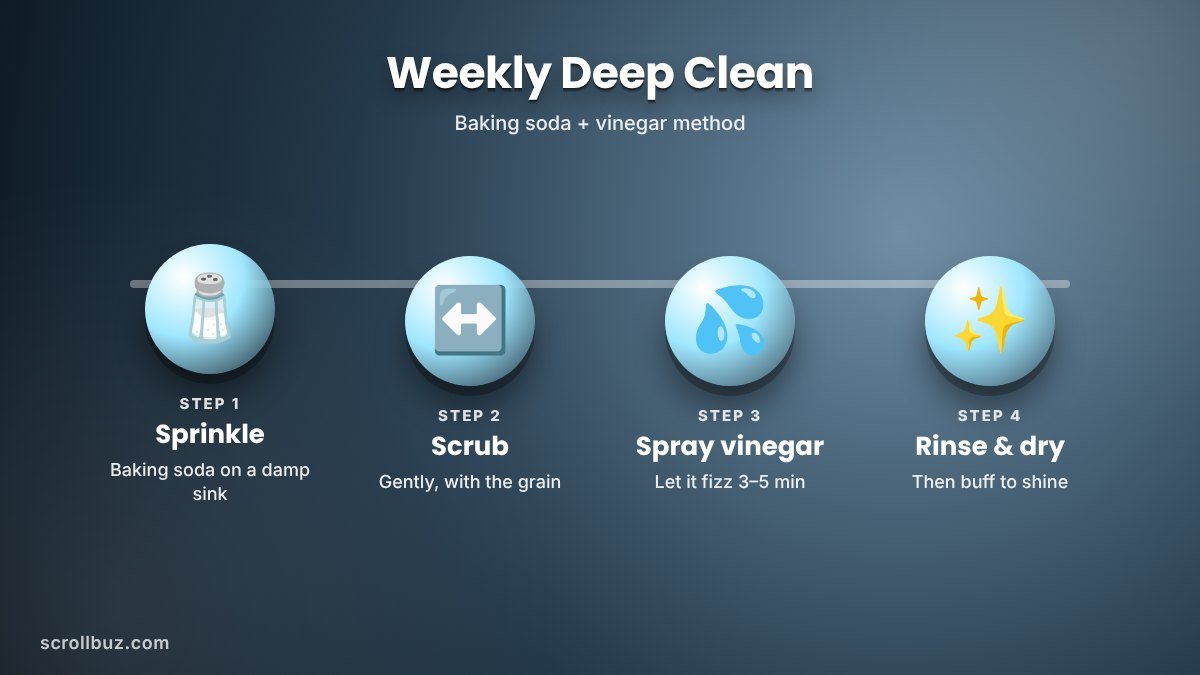
- Rinse the sink so the surface is damp.
- Sprinkle baking soda over the whole basin.
- Scrub gently with a soft sponge, following the grain. Baking soda is mildly abrasive but safe for stainless steel.
- Spray white vinegar over the baking soda. It will fizz and lift grime.
- Let it sit for 3 to 5 minutes.
- Use an old toothbrush around the drain, the rim and the faucet base.
- Rinse well with warm water and dry completely.
Method 3: Remove Hard Water Spots
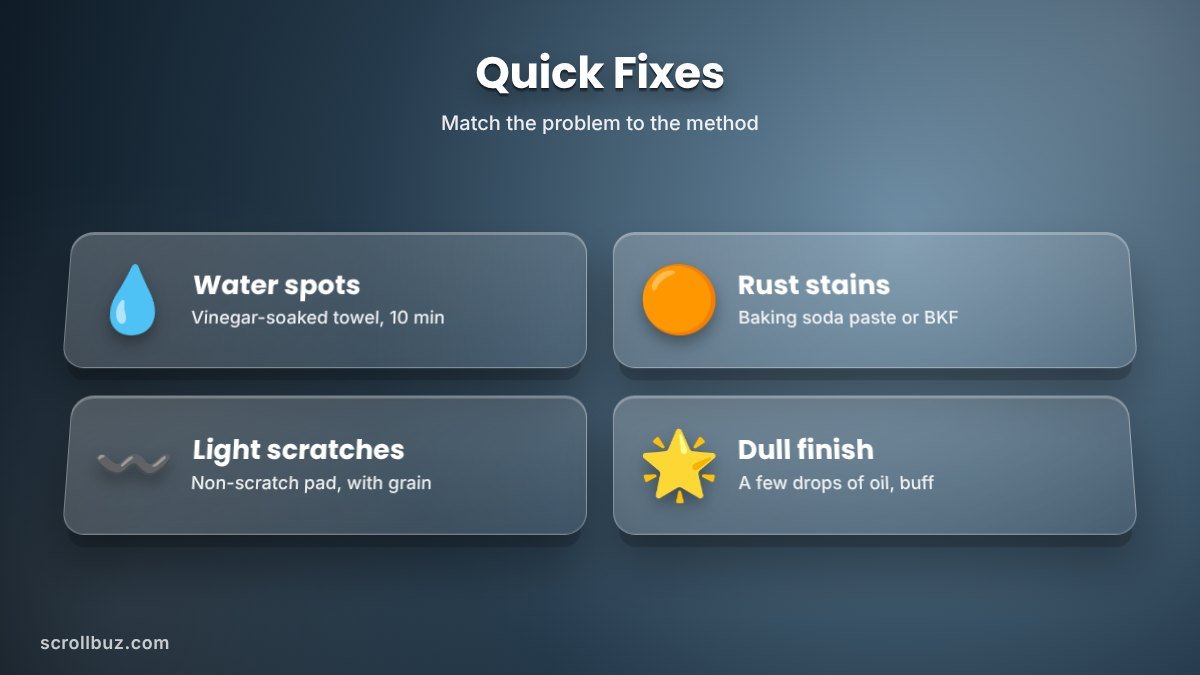
If you clean a stainless steel sink and still see white, chalky spots, those are mineral deposits from hard water. Vinegar dissolves them.
- Soak a paper towel in white vinegar.
- Lay it over the spots and leave it for 10 to 15 minutes.
- Remove the towel and wipe with a damp sponge.
- Rinse and dry.
For heavy buildup, repeat once or use a cream cleanser made for stainless steel. Dry the sink after every use to stop spots from coming back.
Method 4: Remove Rust Stains
Stainless steel resists rust, but it isn’t rust-proof, so you may need a special step to clean a stainless steel sink with orange or brown spots. Rust spots often come from cast iron pans, steel wool or metal cans left in the sink.
- Make a paste of baking soda and a little water.
- Spread it on the rust stain.
- Rub gently with a soft cloth along the grain.
- For tough spots, use a cleanser with oxalic acid, like Bar Keepers Friend. Follow the label directions.
- Rinse and dry.
Method 5: Polish for a Like-New Shine
After you How to Clean a Stainless Steel Sink, a final polish makes it shine and helps water bead up.
- Make sure the sink is completely dry.
- Put a few drops of olive oil or mineral oil on a microfiber cloth.
- Buff the sink with the grain.
- Wipe off any extra oil with a clean, dry cloth.
Do this once a week or before guests come over.
How to Clean a Stainless Steel Sink Drain and Disposal
A clean basin can still smell if the drain is dirty. Pour 1/2 cup of baking soda into the drain, then 1 cup of vinegar. Let it fizz for 10 minutes and flush with hot water. For a garbage disposal, grind a few ice cubes and a lemon wedge to clean the blades and freshen it up.
If your faucet keeps dripping onto the same spot and leaving rings, it may be time for a fix. Our guide on how to fix a leaky faucet walks you through it.
How to Fix Light Scratches
Light surface scratches can be softened, but deep gouges are permanent.
- Use a non-scratch pad and a little cream cleanser.
- Rub gently along the grain, never across it.
- Rinse, dry and polish with oil.
- For deeper scratches, a stainless steel scratch repair kit with fine abrasive pads can blend them in.
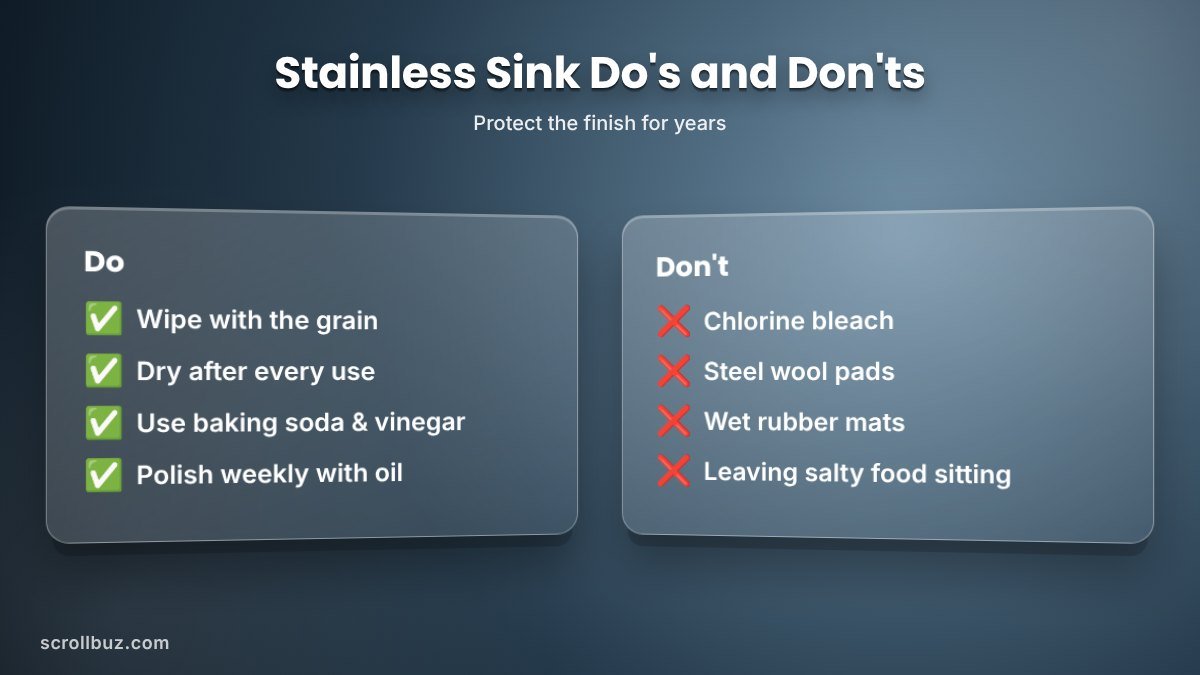
Mistakes to Avoid
How to Clean a Stainless Steel Sink the wrong product can ruin the finish faster than dirt ever could. Never use these when you clean a stainless steel sink:
| Don’t use | Why |
|---|---|
| Chlorine bleach | Can cause pitting and dark stains |
| Steel wool | Leaves scratches and tiny metal bits that rust |
| Abrasive powders with chlorine | Dulls and scratches the finish |
| Rubber dish mats left wet | Trap water and cause stains |
| Salty or acidic food left sitting | Can cause spots and pitting over time |
How Often Should You Clean It?
| Task | How often |
|---|---|
| Rinse and dry | After each use |
| Dish soap wipe | Daily |
| Baking soda and vinegar deep clean | Weekly |
| Oil polish | Weekly or as needed |
| Drain refresh | Every 1 to 2 weeks |
A regular routine makes each cleaning faster, because grime never gets a chance to build up. If you’re giving the whole kitchen a refresh, our guide on how to clean grout is a good next step.
Frequently Asked Questions
What is the best thing to clean a stainless steel sink?
For daily cleaning, dish soap and warm water work best. For a deeper clean, baking soda and white vinegar remove grime, odors and water spots safely.
Can I use Bar Keepers Friend on stainless steel?
Yes. It’s safe for most stainless steel sinks when used with a soft sponge along the grain. Rinse well afterward.
Can you use Clorox wipes to clean a stainless steel sink?
It’s best to avoid bleach-based wipes for regular use. Bleach can cause dark spots and pitting over time.
How do I make my stainless steel sink shiny again?
Clean it, dry it completely, then buff with a few drops of olive oil or mineral oil on a microfiber cloth.
Final Thoughts
Now you know how to clean a stainless steel sink in a few easy steps: soap daily, baking soda and vinegar weekly, and a quick polish for shine. Always go with the grain, skip bleach and steel wool, and dry the sink after use. With that simple routine, your sink will look new for years.