

How to budget for Christmas, pick one total number you can afford without using debt, split it into categories like gifts, food and travel, assign a dollar amount to each person on your list, and save a set amount every week until the holidays. That’s it. The hard part isn’t the math. It’s the hidden costs that sneak in during December and the January credit card bill that follows.
This guide walks you through a simple 7-step plan, shows a real budget example with numbers, and lists the “invisible” holiday costs most budgeting articles never mention.
Why a Christmas Budget Matters
Without a plan, holiday spending happens in dozens of small purchases: an extra gift here, a last-minute grocery run there. Each one feels small, but together they add up fast. A Christmas budget gives you:
- A clear spending limit before you walk into a store
- Less stress because you know every expense is covered
- No January debt hangover from high-interest credit cards
- Protection for your savings, so your emergency fund stays untouched
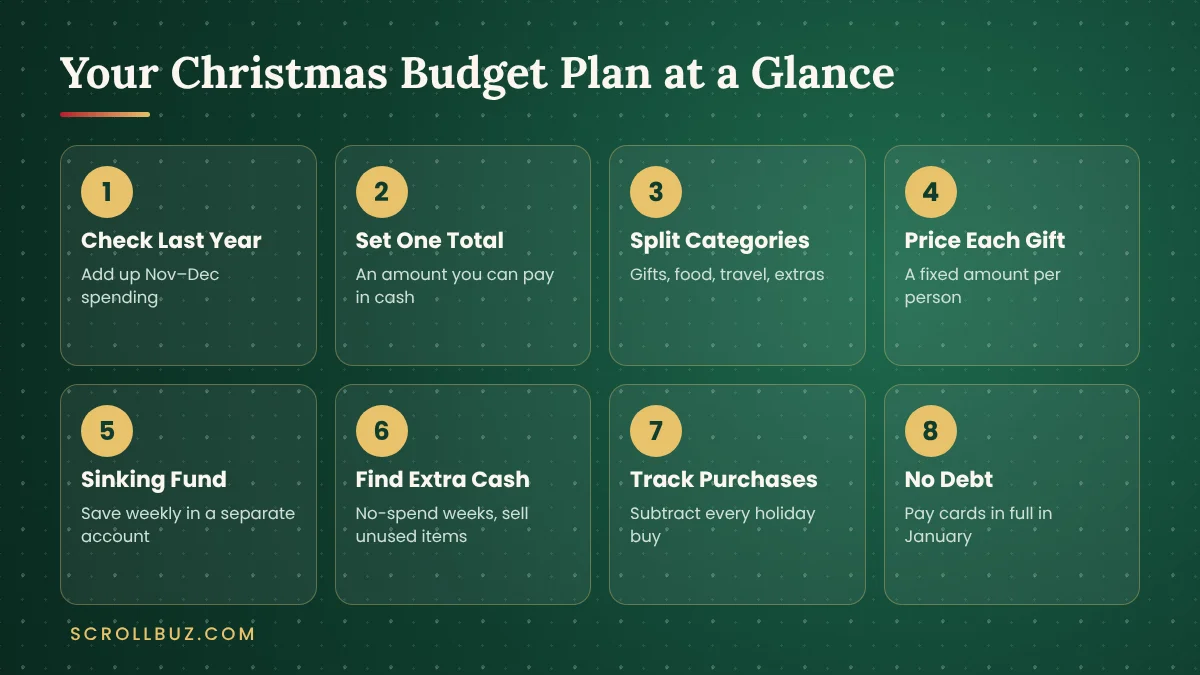
Step 1: Look at Last Year’s Spending
Your best budget starts with real numbers, not guesses. Open last year’s bank and credit card statements for November and December and add up every holiday-related purchase. Include gifts, food, decorations, shipping, travel and parties.
Most people are surprised by the total. That number is your starting point, not a target. It shows where your money really went.
Step 2: Set One Total Christmas Budget
Now choose a total you can pay in cash by the end of December. Ask yourself: “How much can I spend without borrowing, without skipping bills and without touching my emergency fund?”
A simple way to find it:
- Check how many paychecks you have left before Christmas.
- Decide how much you can set aside from each one after bills and essentials.
- Add any money already saved.
Example: If you have 8 weekly paychecks left and can save $60 from each, plus $200 already saved, your total budget is $680.
Step 3: Split Your Budget Into Categories
Gifts usually get all the attention, but they’re often only half of holiday spending. Divide your total across every category:
| Category | Share of Budget | What It Covers |
|---|---|---|
| Gifts | 45–55% | Family, friends, coworkers, teachers, gift exchanges |
| Food and drinks | 15–20% | Holiday meals, baking, hosting, parties |
| Travel | 10–20% | Gas, flights, hotels, pet sitting |
| Decorations | 5% | Lights, tree, replacements |
| Cards, wrapping and shipping | 5% | Paper, tape, stamps, postage |
| Buffer | 5–10% | Surprises and last-minute needs |
If you don’t travel, move that money into gifts or savings.
Step 4: Make a Gift List With a Price for Each Person
Write down every person you plan to buy for, then assign a fixed dollar amount next to each name. Don’t forget the “extra” people that often get missed: teachers, mail carriers, hosts, coworkers and a white elephant gift for parties.
A Real Christmas Budget Example
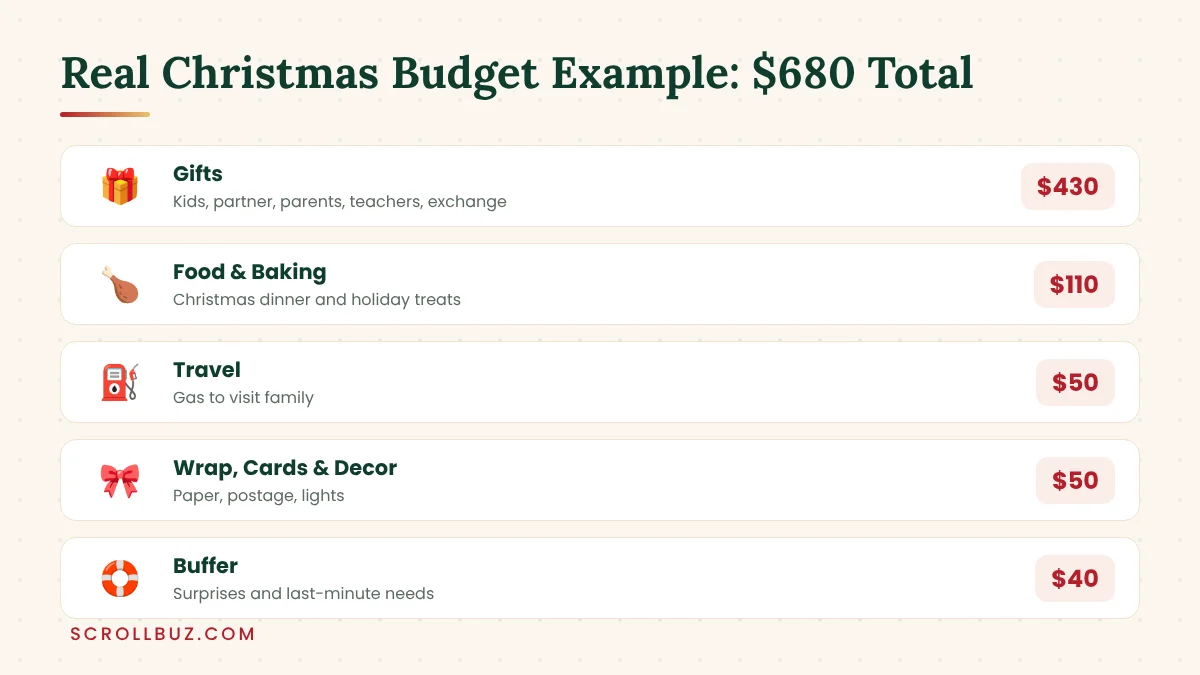
Here’s how the $680 budget from Step 2 might look for a family of four:
| Category | Amount |
|---|---|
| Gifts for 2 kids ($100 each) | $200 |
| Gift for partner | $75 |
| Parents and in-laws (4 × $25) | $100 |
| Teachers and coach (3 × $10) | $30 |
| Office white elephant gift | $25 |
| Christmas dinner and baking | $110 |
| Gas to visit family | $50 |
| Wrapping, cards and shipping | $30 |
| Decorations | $20 |
| Buffer | $40 |
| Total | $680 |
Notice the buffer. Something always comes up, and the buffer stops one surprise from breaking the whole plan.
Step 5: Start a Christmas Sinking Fund
A sinking fund is money you save a little at a time for a planned expense. For Christmas, divide your total budget by the number of weeks or paychecks left.
- $680 ÷ 8 weeks = $85 a week
- $680 ÷ 4 paychecks = $170 per paycheck
Set up an automatic transfer into a separate savings account labeled “Christmas.” Keeping the money separate stops it from blending into everyday spending. Next year, start in January and the weekly amount drops to about $13. Some banks and credit unions offer a Christmas club account that does this for you and pays out in the fall.
Step 6: Find Extra Money for Christmas Without Debt
If your budget feels too tight, find money in your current spending before reaching for a credit card:
- Try a short no-spend challenge. Cut all non-essential spending for two to four weeks. Here’s how a no-spend challenge works.
- Trim grocery spending. Use these tips to save money on groceries and move the difference to your Christmas fund.
- Cut fuel costs with these ways to save money on gas, especially before holiday road trips.
- Sell unused items online before December.
- Pause subscriptions you don’t use until January.
Step 7: Track Every Purchase in December
A budget only works if you track it. Every time you buy something holiday-related, write it down in a notes app or simple spreadsheet. Subtract it from the category total. When a category hits zero, stop or move money from the buffer, never from bills.
Hidden Christmas Costs Most People Forget
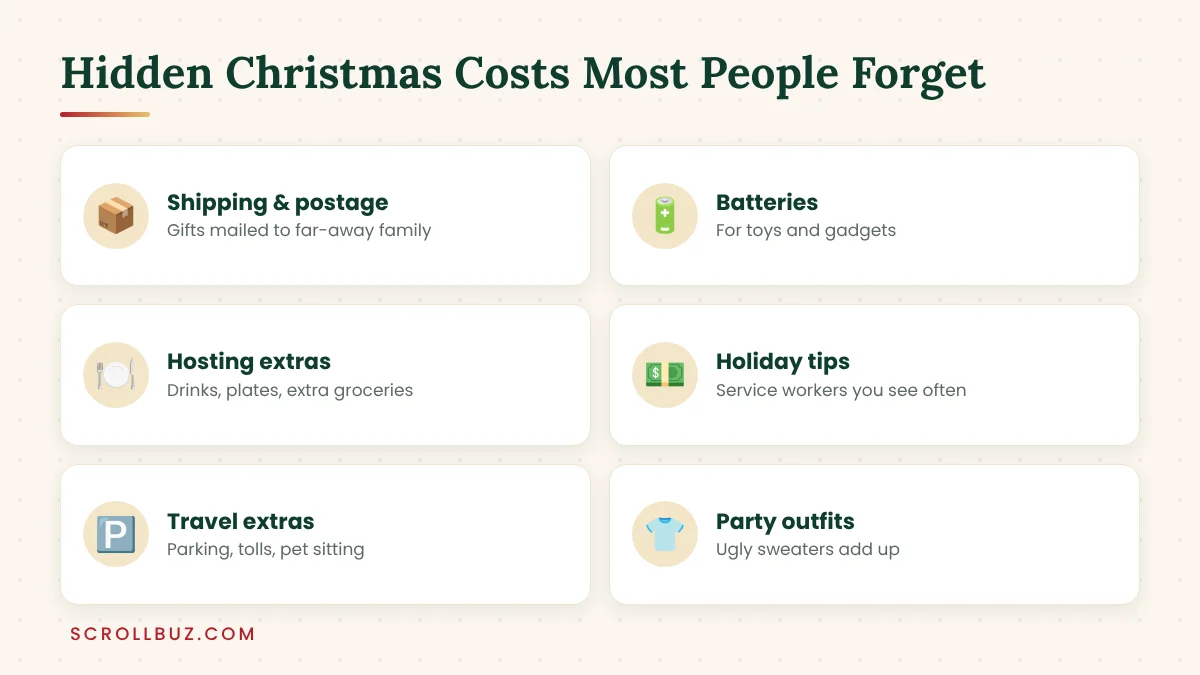
These are the expenses that quietly blow up holiday budgets. Add a line for each one that applies to you:
- Shipping and postage for gifts sent to family far away
- Batteries for toys and gadgets
- Gift wrap, tape, bags and cards
- Hosting costs like extra groceries, drinks and paper plates
- Holiday tips for regular service workers
- Travel extras like parking, tolls and pet sitting
- Party outfits or an ugly sweater for the office party
- Charity donations and school collections
- Replacement decorations and light strands that burned out
How to Spend Less on Gifts Without Looking Cheap
- Suggest a family gift exchange. Each adult buys for one person instead of everyone.
- Set price limits with friends and coworkers early.
- Give experiences, like a movie night or a home-cooked dinner.
- Make homemade gifts such as baked goods or photo albums.
- Shop early sales but only for items already on your list.
- Use cash-back or rewards points you’ve already earned.
How to Avoid a January Debt Hangover
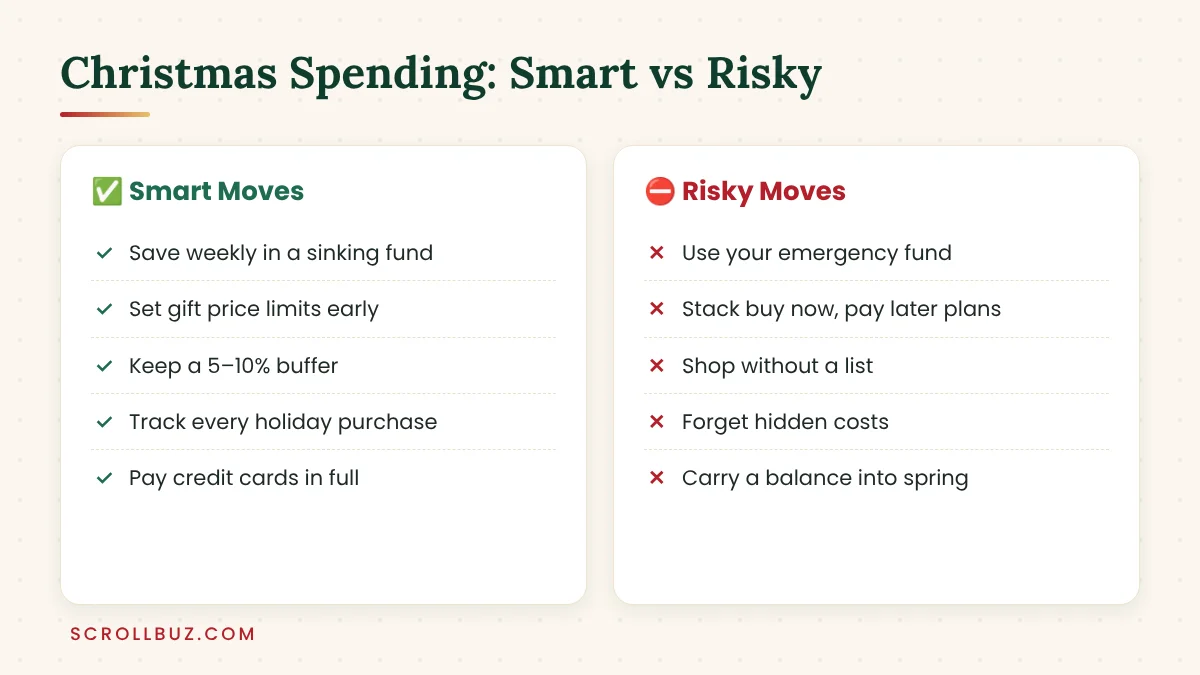
If you use a credit card for rewards or purchase protection, treat it like a debit card: only charge what’s already sitting in your Christmas fund, and pay the balance in full when the bill arrives. Carrying a balance means paying interest on gifts long after the holidays, and high balances can even cause your credit score to dip. Learn more about why your credit score can drop.
Be careful with “buy now, pay later” offers too. Several small payment plans running at once are easy to lose track of in January.
Use Your Regular Budget Method for Christmas
Christmas spending works best when it fits your normal budget system:
- With the 50/30/20 budget rule, Christmas savings come from the 30% “wants” portion.
- With a zero-based budget, give your Christmas sinking fund its own line every month.
Frequently Asked Questions
How much should I spend on Christmas?
Spend only what you can pay in cash by the end of December without skipping bills or using your emergency fund. Your budget depends on your income and family size, not on what others spend.
When should I start saving for Christmas?
January is ideal because small monthly amounts add up. If you’re starting in October or November, divide your budget by the weeks left and save from every paycheck.
What percentage of a Christmas budget should go to gifts?
Gifts usually take about half of the total. The rest covers food, travel, decorations, wrapping and a buffer for surprises.
How do I tell family I’m spending less on Christmas this year?
Be honest early, before people start shopping. Suggest a gift exchange, a price limit or an experience-based gift. Most relatives feel relieved, not offended.
Is it OK to use a credit card for Christmas shopping?
Only if you already have the cash saved and pay the full balance when the bill arrives. Otherwise, interest makes your gifts much more expensive.
Final Thoughts
Learning how to budget for Christmas comes down to one number, a few categories and steady weekly saving. Look at last year’s spending, set a total you can pay in cash, plan for the hidden costs and track every purchase. Start today, even with a small amount, and this year’s holidays can end without a debt hangover.



Pingback: 50 White Elephant Gift Ideas People Will Actually Steal