

You turn the key or press the start button, and instead of the engine roaring to life, you hear click. Or worse, a fast click-click-click-click while the dashboard lights flicker. It’s a sinking feeling, especially when you’re already running late.
A clicking noise when trying to start car is your vehicle’s way of saying it isn’t getting enough electrical power to turn the engine over. The good news is that the type of click you hear tells you a lot about what’s wrong. In this guide, you’ll learn how to read those sounds, the seven most common causes, and what you can safely check yourself before calling a tow truck.
Quick answer: Rapid clicking usually means a weak or dead battery or loose battery cables. A single loud click usually points to a bad starter motor, starter solenoid, or a poor connection to the starter. Try a jump start first. If the car starts, the battery or charging system is the problem. If it still only clicks once, look at the starter.
Single Click vs. Rapid Clicking: What’s the Difference?
Before you grab any tools, listen closely. These two sounds point in very different directions.
| What You Hear | What’s Usually Happening | Most Likely Cause |
|---|---|---|
| Rapid clicking (machine-gun sound) | The starter solenoid is engaging and dropping out over and over because voltage keeps collapsing | Weak battery, corroded or loose terminals |
| One loud click, then nothing | The solenoid engages, but the starter motor doesn’t spin | Bad starter, failed solenoid, bad ground |
| Clicking with dim or flickering dash lights | Not enough power reaching the electrical system | Battery or alternator issue |
| Clicking with bright dash lights | Battery is fine, but power isn’t reaching the starter | Starter, wiring, or ignition switch |
7 Common Causes of a Clicking Noise When Starting a Car
1. A Weak or Dead Battery
This is the number one cause by far. Your starter motor needs a big burst of current, often 150 amps or more. A battery that can still run the radio and dome light may not have enough left to crank the engine. The result is that rapid clicking sound.
Batteries usually last 3 to 5 years. Cold weather, short trips, and leaving lights on can drain them faster. If your car has been sitting for a week or two, a weak battery is very likely.
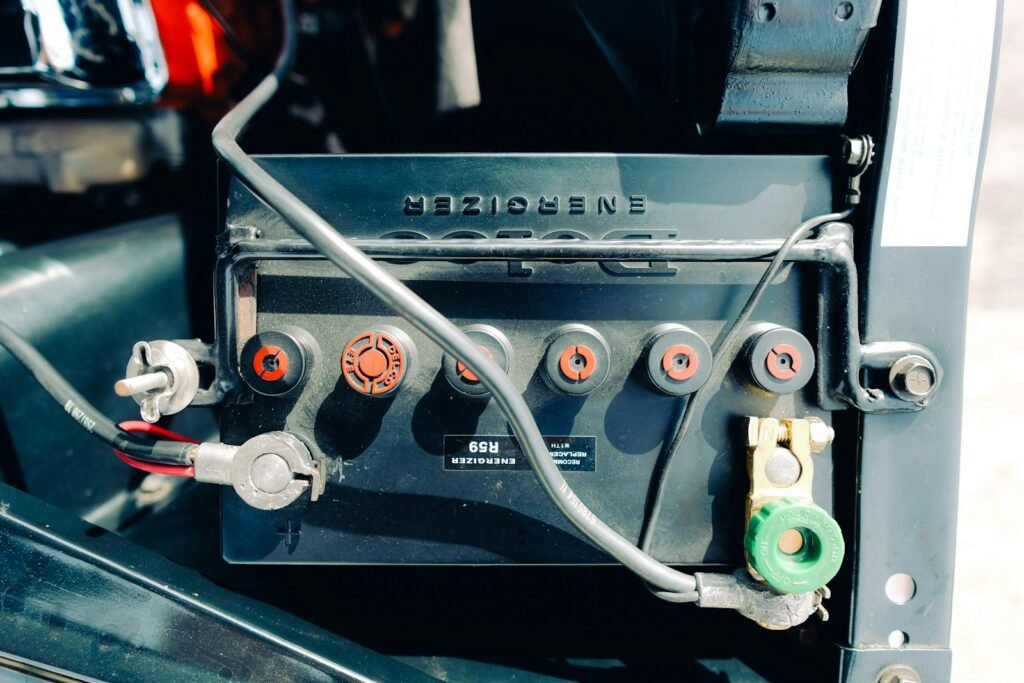
2. Corroded or Loose Battery Terminals
Even a healthy battery can’t deliver power through dirty or loose connections. Pop the hood and look at the terminals. White, blue, or green crusty buildup is corrosion, and it acts like a roadblock for electricity. A cable that wiggles by hand is also a problem.
3. A Failing Alternator
The alternator recharges the battery while you drive. If it’s failing, the battery slowly drains until one morning the car just clicks. A common clue is a car that starts after a jump, then dies again a day or two later. If your dashboard battery warning light has been coming on, read our guide on what a battery light on in your car means.
4. A Bad Starter Motor
If you hear one solid click and the dash lights stay bright, the starter itself may be worn out. Starters often fail gradually: you might notice slow cranking or occasional single clicks for weeks before it quits completely.
5. A Faulty Starter Solenoid or Relay
The solenoid is a small switch, usually mounted on the starter, that sends battery power to the starter motor. When its contacts wear out, it clicks but doesn’t pass current through. A bad starter relay in the fuse box can cause similar symptoms.
6. A Bad Ground Connection
Electricity needs a complete loop. The negative battery cable and the engine ground strap connect the electrical system to the car’s metal body. If either is corroded, frayed, or loose, the starter won’t get enough current, even with a perfect battery.
7. A Seized Engine or Other Mechanical Problem
This one is rare, but if the engine can’t physically turn, because of hydrolock or internal damage, the starter will just click. If you’ve ruled out everything else and the car was running poorly before it stopped, have a mechanic check it out. Low oil can contribute to serious engine damage, so it’s worth knowing how to check the oil level in your car regularly.
How to Diagnose the Problem Step by Step
Work through these checks in order. Each step rules out a possible cause and brings you closer to the real fix.
- Check the dashboard lights. Turn the key to “on” without starting. Are the lights bright, dim, or flickering? Dim lights point toward the battery.
- Turn on the headlights and try to start. If the headlights dim heavily or go out while you crank, the battery is weak. If they stay bright and you hear one click, suspect the starter.
- Inspect the battery terminals. Look for corrosion and wiggle each cable. Everything should be clean and tight.
- Test the battery voltage. A healthy, fully charged battery reads about 12.6 volts with the engine off. Anything below 12.2 volts means it’s significantly discharged. Many auto parts stores test batteries for free.
- Try a jump start. If the car starts right up with a jump, the battery or charging system is the problem.
- Try the “tap test” on the starter. On older vehicles, gently tapping the starter with a wrench handle while a helper turns the key can sometimes free a sticking starter. If this works, the starter is on its way out and should be replaced soon.
How to Fix a Car That Clicks but Won’t Start
Clean the Battery Terminals
With the engine off, disconnect the negative (black) cable first, then the positive (red). Scrub the posts and cable clamps with a wire brush and a paste of baking soda and water. Rinse with a little clean water, dry everything, then reconnect the positive cable first and the negative last. A thin layer of petroleum jelly on the terminals helps slow future corrosion.
Jump Start the Car
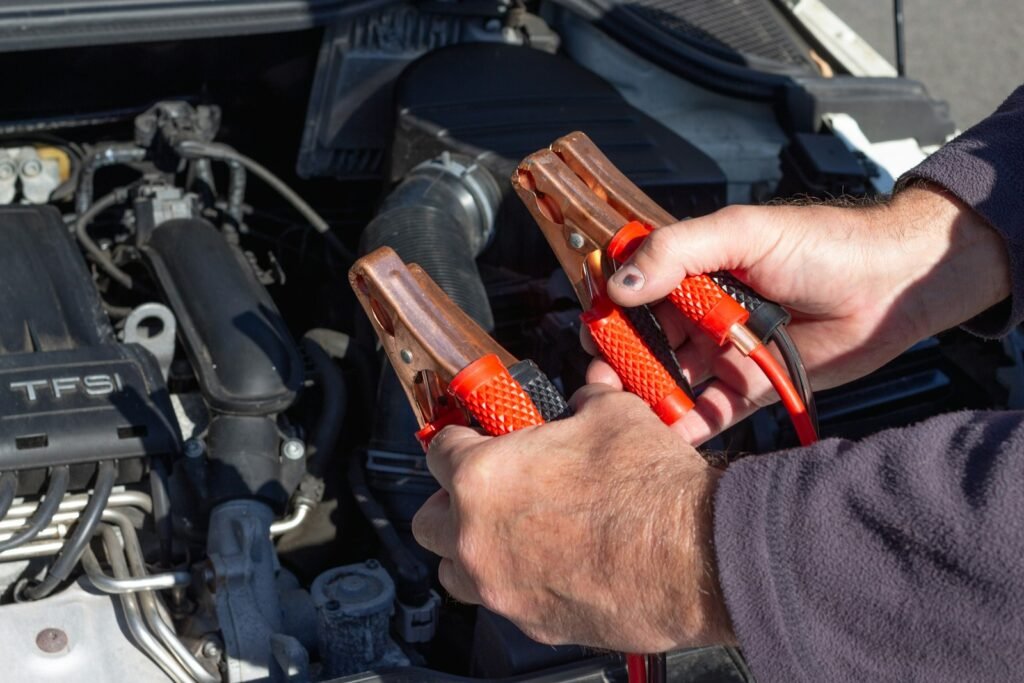
Use jumper cables and a working car, or a portable jump starter:
- Connect the red clamp to the dead battery’s positive terminal.
- Connect the other red clamp to the good battery’s positive terminal.
- Connect the black clamp to the good battery’s negative terminal.
- Connect the last black clamp to a bare metal bolt on the dead car’s engine, away from the battery.
- Start the working car, wait 2 to 3 minutes, then try starting yours.
Once it runs, drive for at least 20 to 30 minutes so the alternator can recharge the battery.
Replace the Battery
If the battery is more than four years old or fails a load test, replace it. Most batteries can be swapped at home with a basic socket set in about 15 to 20 minutes, and many auto parts stores will install one for free.
Repair or Replace the Starter
If the battery tests good and the car still gives one click, the starter or solenoid is the likely problem. On some cars the starter is easy to reach, while on others it’s buried under intake parts. Replacement usually costs between $250 and $700 at a shop, including parts and labor.
Repair Cost at a Glance
| Repair | DIY Cost | Shop Cost |
|---|---|---|
| Clean battery terminals | $0 – $10 | $20 – $50 |
| New battery | $100 – $250 | $150 – $350 |
| Starter replacement | $100 – $350 (part) | $250 – $700 |
| Alternator replacement | $150 – $400 (part) | $400 – $900 |
Costs vary by vehicle and location, so use these as a rough guide.
How to Prevent Starting Problems
- Have your battery tested once a year after it turns three.
- Keep terminals clean and tight, especially before winter.
- Avoid lots of very short trips that never fully recharge the battery.
- Turn off lights and accessories before shutting the engine off.
- If you park for long periods, use a battery maintainer.
When to See a Mechanic
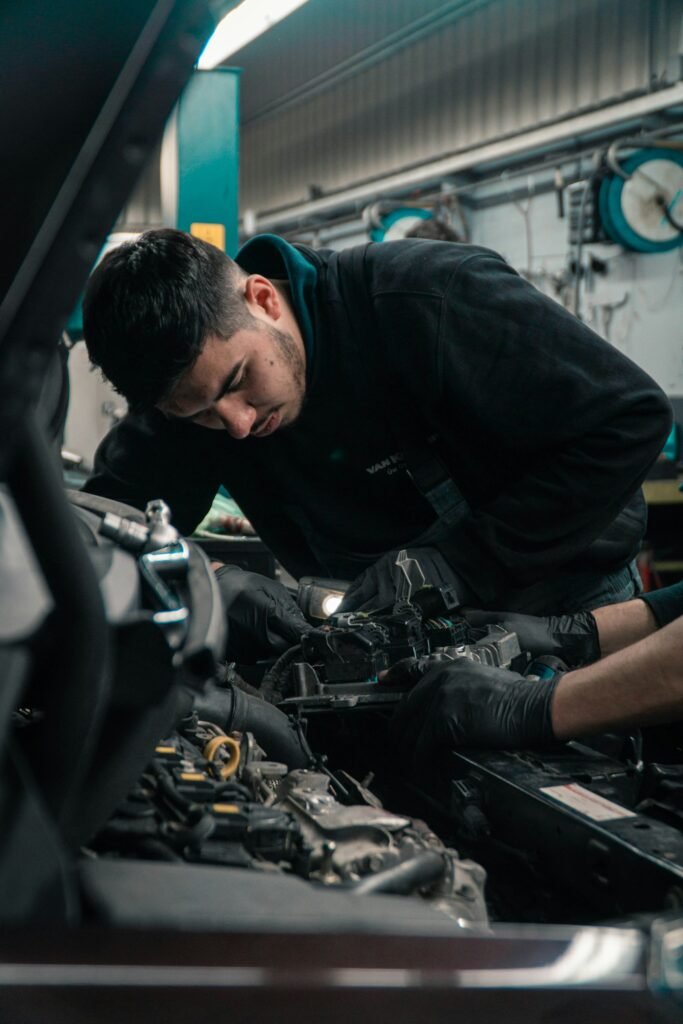
Call a professional if the car still clicks after a jump start, you smell burning, you see smoke, or the clicking comes with grinding noises. These can signal starter, wiring, or engine problems that are best handled with proper equipment.
Frequently Asked Questions
Can a bad alternator cause a clicking noise when starting?
Yes, indirectly. A failing alternator doesn’t recharge the battery, so the battery slowly drains until it can’t crank the engine, and you hear clicking.
Why does my car click but the lights still work?
Lights need very little power, while the starter needs a lot. A weak battery can run the lights fine but still fail to crank the engine.
Can I drive my car after it clicks and then starts?
Yes, but get the battery and starter tested soon. An intermittent click usually turns into a no-start at the worst possible moment.
Will a jump start fix a bad starter?
No. A jump start only helps if the battery is the problem. If you still hear a single click with jumper cables connected, the starter, solenoid, or wiring needs attention.
Final Thoughts
A clicking noise when trying to start your car sounds scary, but it’s usually a simple electrical issue. Rapid clicking almost always points to the battery or its connections, while a single click usually means the starter. Start with the easy checks, clean the terminals, try a jump, and you’ll either be back on the road or know exactly what to tell your mechanic.