
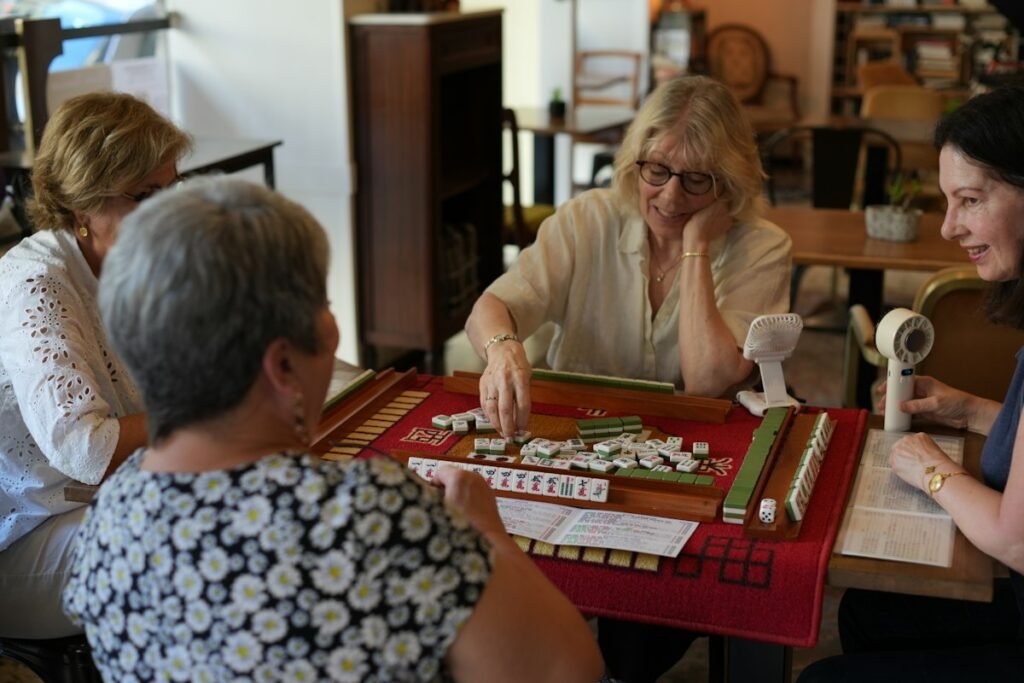

How to play Mahjong looks intimidating the first time you see it: 144 tiles covered in symbols, a square wall in the middle of the table, and four players clicking tiles at a fast pace. The good news is that the basic idea is simple. If you’ve ever played rummy, you already understand the core goal: collect sets and be the first to complete a winning hand.
This beginner-friendly guide explains how to play mahjong using the classic Chinese (Hong Kong style) rules, which are the most common starting point. Once you know these, picking up other versions, like American or Japanese Riichi mahjong, gets much easier.
What You Need to Play
- A mahjong set with 144 tiles (some sets include extras or blank tiles)
- Four players (three-player versions exist, but four is standard)
- Two dice to decide where the wall is broken
- A table big enough for a square wall and each player’s hand
- Optional: scoring chips or a pen and paper
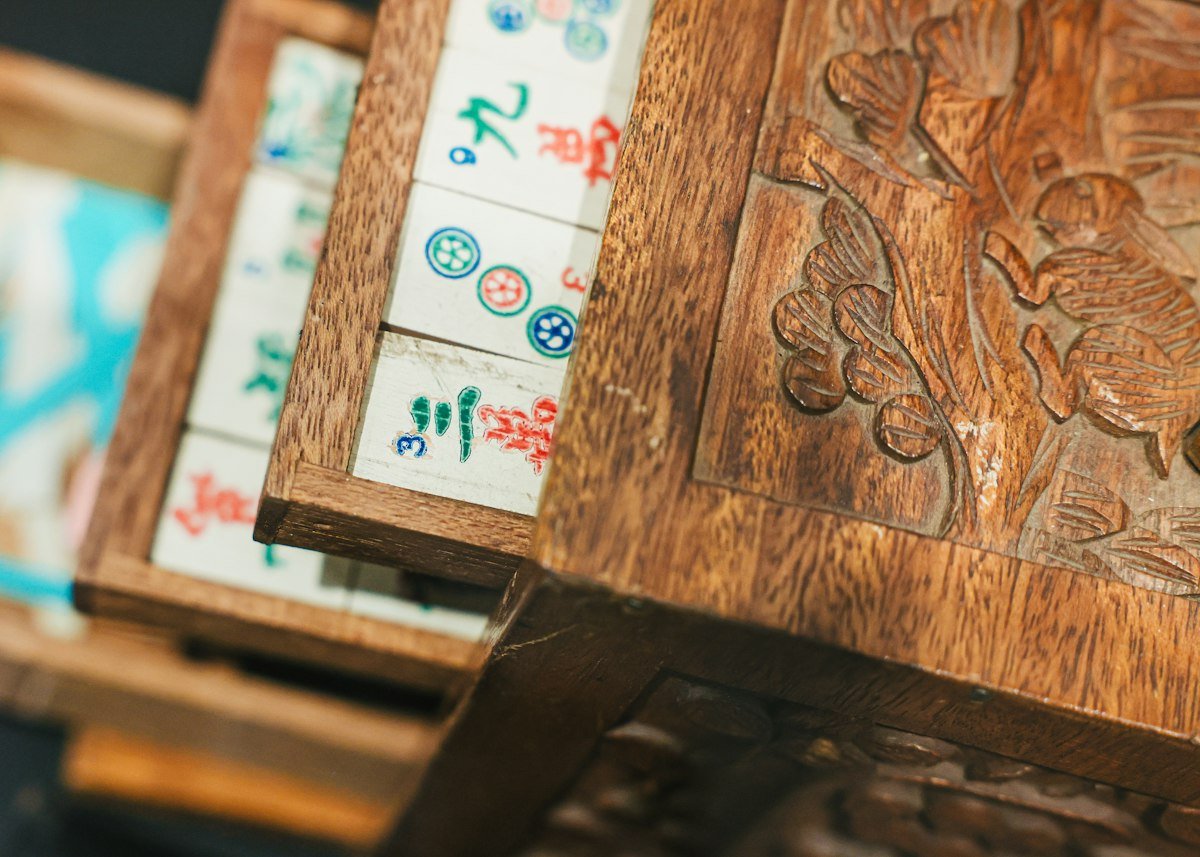
Understanding the Mahjong Tiles
Learning the tiles is the first real step. They fall into three groups.
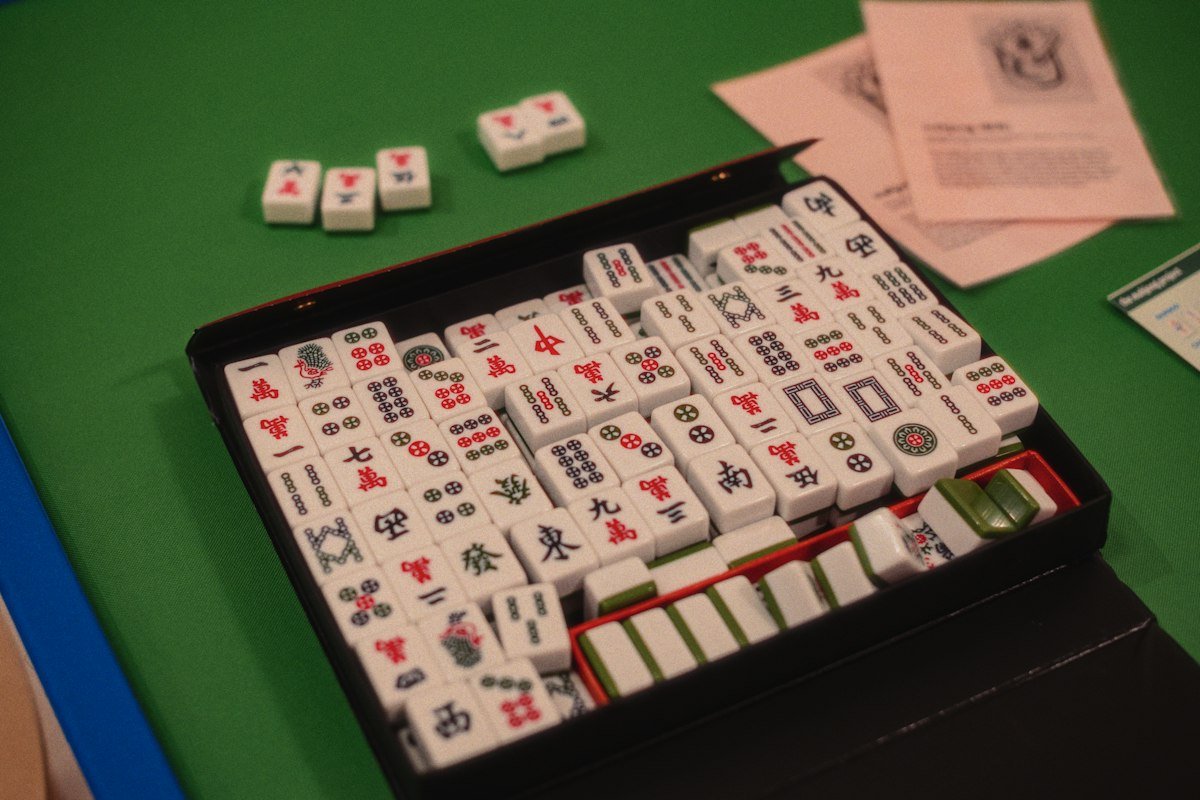
The Three Suits (108 tiles)
Each suit has tiles numbered 1 to 9, with four copies of every tile.
- Dots (or circles): Show round coin-like symbols.
- Bamboo (or bams): Show bamboo sticks. The 1 of bamboo is usually a bird.
- Characters (or cracks): Show a Chinese number on top and the character for “ten thousand” below.
Honor Tiles (28 tiles)
- Winds: East, South, West, and North, four of each.
- Dragons: Red, Green, and White, four of each. The White Dragon is often a blank tile or a tile with a blue frame.
Bonus Tiles (8 tiles)
There are four Flowers and four Seasons. They aren’t used to build sets. When you draw one, you place it face-up beside you and draw a replacement tile. In many games they add bonus points.
The Goal of the Game
Your aim is to build a complete hand of 14 tiles made of:
- Four sets (melds), plus
- One pair (two identical tiles, sometimes called “eyes”)
A set can be one of three things:
- Pung: Three identical tiles, like three 5 of Dots or three Red Dragons.
- Kong: Four identical tiles. It counts as a single set, so you draw an extra tile to keep your hand size correct.
- Chow: Three tiles in a row from the same suit, like 3-4-5 of Bamboo. Honor tiles can’t form a chow.
How to Set Up the Game
- Choose seats and the dealer. Players roll the dice to decide who starts as East, the dealer. The other seats follow counter-clockwise: South, West, and North.
- Shuffle the tiles. Turn all tiles face-down and mix them on the table. Players often call this “washing” the tiles.
- Build the wall. Each player builds a row 18 tiles long and 2 tiles high in front of them. Push the four rows together to form a square wall.
- Break the wall. The dealer rolls the dice. The total decides which section of the wall is opened and where dealing begins.
- Deal the tiles. Players take tiles in blocks from the wall until everyone has 13 tiles. The dealer takes one extra and starts with 14.
- Replace bonus tiles. Anyone holding Flowers or Seasons sets them aside and draws replacements.
How a Turn Works
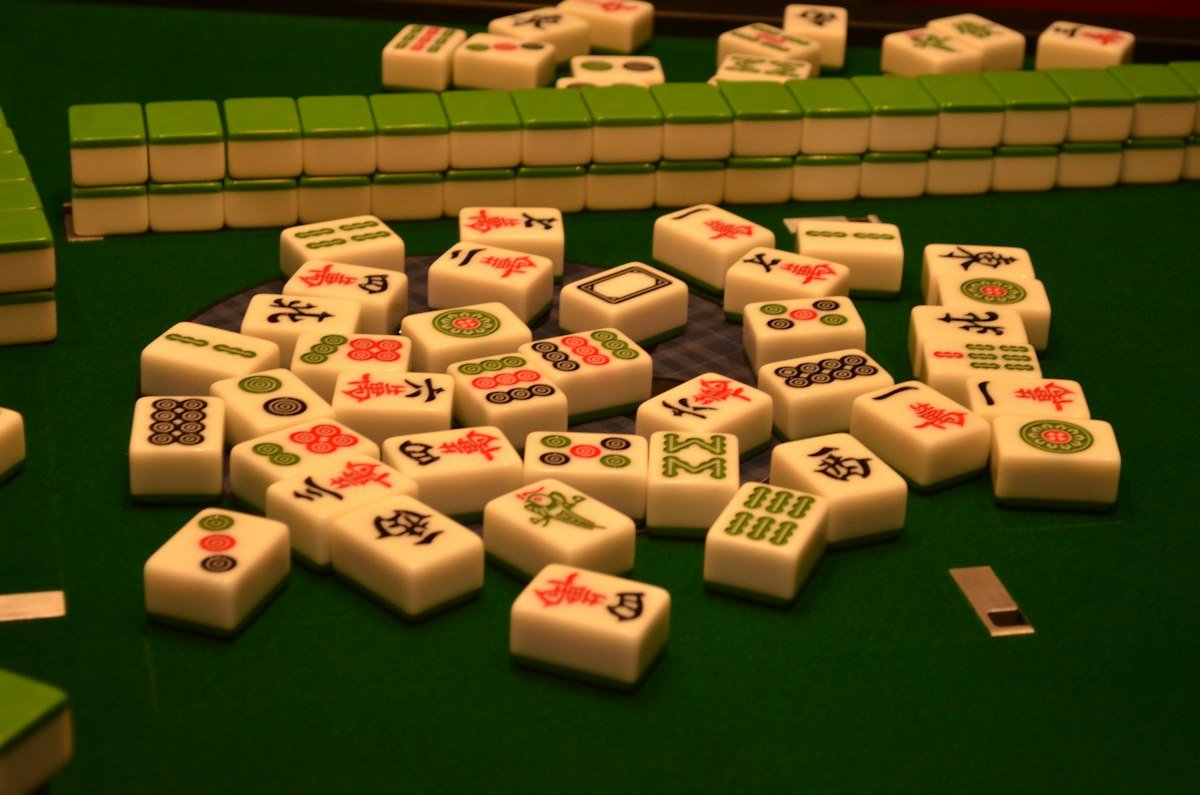
Play moves counter-clockwise. The dealer begins by discarding one tile, since they start with 14. After that, each turn follows the same rhythm:
- Draw one tile from the wall (or claim the last discarded tile, explained below).
- Decide whether it helps your hand.
- Discard one tile face-up into the center, calling out its name.
You always end your turn with 13 tiles, unless you’ve just won.
Claiming a Discard
This is where mahjong gets interesting. When someone discards a tile, you may be able to grab it instead of drawing from the wall:
- For a pung or kong: Any player can claim the discard if they hold two (or three) matching tiles. Call “Pung!” or “Kong!”.
- For a chow: Only the player whose turn is next (to the right of the discarder) can claim a discard to complete a sequence.
- To win: Any player can claim a discard if it completes their winning hand.
When you claim a tile, you must lay that set face-up in front of you. That means other players can see part of your hand, so many players prefer to build concealed sets from the wall when they can. If two players want the same tile, a winning claim comes first, then pung or kong, then chow. Play then continues from the player who claimed the tile, so some players may get skipped.
Declaring a Kong
If you make a kong, set the four tiles out and draw a replacement tile from the end of the wall. Otherwise you’d be one tile short of a complete hand.
How to Win a Hand
When your 14 tiles form four sets and a pair, declare “Mahjong!” and show your hand. You can win by drawing the final tile yourself (called self-drawn) or by claiming another player’s discard.
If the wall runs out before anyone wins, the hand is a draw and the tiles are reshuffled. In most rules, the dealer keeps the East seat after winning or after a draw, and the dealer role passes to the next player when someone else wins.
Simple Scoring for Beginners
Scoring is the part that varies most between regions and families. Hong Kong style uses “fan” (points for special hand patterns), while other styles have their own systems. For your first few games, keep it simple:
- The winner scores 1 point for a basic hand.
- Add a point for winning on a self-drawn tile.
- Add a point for an all-pungs hand (no chows).
- Add a point for an all-one-suit hand.
- Each Flower or Season matching your seat can count as a bonus point.
Once everyone is comfortable, look up a full fan table and agree on the rules before you start. House rules are completely normal in mahjong; just make sure everyone knows them.
Beginner Tips and Strategy
- Watch the discards. If three 7 of Bamboo are already on the table, don’t wait for the fourth.
- Stay flexible early. Keep tiles that can grow into several different sets, like 4 and 5 of the same suit.
- Don’t claim too eagerly. Exposing sets makes your hand easier to read and can limit your scoring options.
- Get rid of lonely honors early. A single wind or dragon tile with no partner is often your safest early discard.
- Play defensively late. When the wall runs low, discard tiles that others have already thrown away, since they’re less likely to complete someone’s hand.
Mahjong vs. Rummy
Both are “set collection” games, which is why rummy players learn mahjong quickly. The main differences are the tiles instead of cards, the shared wall, and the ability to claim discards out of turn. If you enjoy card games like this, our guide to Rummy 500 rules is another fun one to add to your game night.
Frequently Asked Questions
How long does a game of mahjong take?
A single hand usually takes 5 to 15 minutes. A full game, where every player has a turn as dealer through all four wind rounds, can take two to four hours.
Is mahjong hard to learn?
The basic rules can be learned in an hour or two. Getting fast at recognizing tiles and planning your hand takes a few games, but most beginners start enjoying it after the first session.
What’s the difference between Chinese and American mahjong?
American mahjong uses jokers and a yearly card of official winning hands that changes every year. Chinese styles don’t use jokers and focus on the four-sets-and-a-pair structure explained above.
Can you play mahjong online?
Yes. Many apps and websites let you play the multiplayer versions above. Note that “mahjong solitaire,” the tile-matching game on many phones, is a completely different single-player puzzle.
Ready to Play?
Learning how to play mahjong is mostly about getting familiar with the tiles and the rhythm of draw, decide, and discard. Play a few practice hands with open tiles, keep scoring simple, and before long you’ll be calling “Pung!” with confidence. It’s a social, strategic game that people enjoy for a lifetime, and a great way to spend an evening with family and friends.