

You’re driving along, everything feels normal, and then a small red rectangle with a plus and minus sign lights up on your dashboard. It’s easy to assume the battery is dead or about to die. In reality, that little light is usually telling you something different: your car’s charging system isn’t doing its job.
This guide explains what it means when the battery light is on in your car, the most common causes, what you can safely check yourself, and when to stop driving and call for help. No jargon, just practical steps.
What Does the Battery Light Mean?
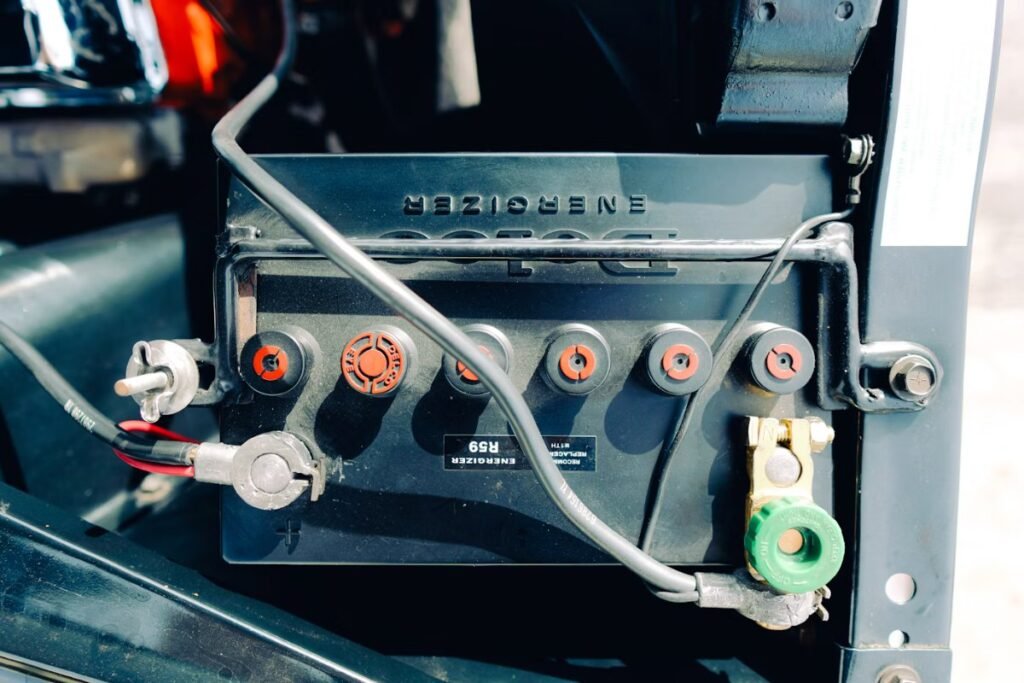
The battery warning light (sometimes labeled “charge” or “ALT”) monitors voltage in the electrical system. When the engine is running, the alternator should keep that voltage somewhere around 13.7 to 14.7 volts. If the voltage drops too low or climbs too high, the car’s computer switches the light on.
So the light is less about the battery itself and more about whether the battery is being charged. A brand-new battery can still trigger the light if the alternator, belt or wiring has a problem.
Quick note: it’s normal for the light to glow for a second or two when you first turn the key, as part of the dashboard self-check. It should go out once the engine starts. If it stays on, or comes on while you’re driving, that’s when to pay attention.
7 Common Reasons the Battery Light Comes On
1. A Failing Alternator
This is the most common culprit. The alternator is a small generator driven by the engine that powers your electronics and recharges the battery. When it wears out, the car starts running on battery power alone, and the light comes on. Other signs include dim or flickering headlights, a whining or grinding noise from the engine bay, and electrical accessories acting strangely.
2. A Loose, Worn or Broken Serpentine Belt
The alternator is spun by a rubber belt (usually the serpentine belt). If that belt is cracked, glazed, loose or snapped, the alternator can’t spin properly. A squealing noise at startup or when you turn the steering wheel is a classic warning. A broken belt can also take out your power steering and water pump, so it’s not something to ignore.
3. Corroded or Loose Battery Terminals
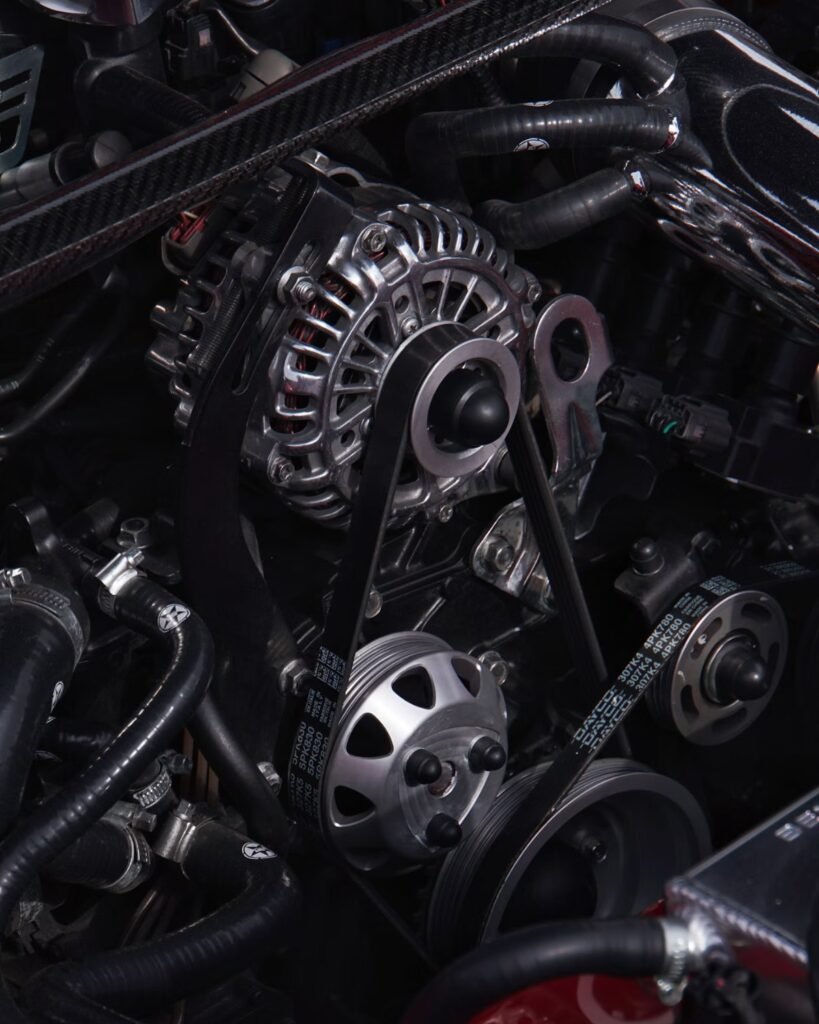
White, green or bluish crust on the battery posts blocks the flow of current. A loose clamp does the same thing. Both can confuse the charging system and switch the light on, even when the alternator is fine. This is one of the easiest fixes on the list.
4. An Old or Weak Battery
Most car batteries last about three to five years. As they age, they hold less charge and can cause voltage dips that trigger the warning. If your battery is near the end of its life and you’ve also noticed slow cranking on cold mornings, the battery itself may be the issue.
5. A Bad Voltage Regulator
The voltage regulator (built into the alternator on most modern cars) keeps the charging voltage in a safe range. If it fails, voltage can drop too low or spike too high. Overcharging can damage the battery and sensitive electronics, so a faulty regulator is worth fixing quickly.
6. Damaged Wiring or a Blown Fuse
A frayed cable, a bad ground strap or a blown fuse in the charging circuit can interrupt the signal between the alternator and battery. These problems often cause the light to flicker on and off, especially over bumps.
7. Heavy Electrical Load at Idle
Running the AC on max, heated seats, rear defroster, high-beam lights and a phone charger all at once while idling can briefly pull voltage down. If the light only appears in this situation and goes off when you rev the engine or switch things off, your alternator may be getting weak.
Quick Symptom Checker
| What you notice | Most likely cause |
|---|---|
| Light on + dim or flickering headlights | Failing alternator |
| Light on + squealing noise | Loose or worn serpentine belt |
| Light flickers over bumps | Loose terminal, bad ground or damaged wiring |
| Light on + slow cranking in the morning | Weak or old battery |
| Light on + burning smell or very hot battery | Overcharging / faulty voltage regulator |
| Light only at idle with lots of accessories on | Weak alternator output |
What to Do When the Battery Light Comes On
- Stay calm and reduce the load. Turn off the radio, AC or heater, seat heaters and any chargers. This saves battery power for the things that matter, like the ignition and lights.
- Check your other gauges. If the temperature gauge is climbing too, the belt that drives your water pump may have broken. Pull over safely and turn the engine off to avoid overheating.
- Avoid turning the engine off if you need to keep going. If the alternator isn’t charging, the battery may not have enough power to restart the car.
- Head to a safe place or a repair shop. Most cars can run for roughly 20 to 60 minutes on battery power alone, depending on battery health and electrical load. Don’t plan a long trip.
- Get the charging system tested. Many auto parts stores will test your battery and alternator for free in a few minutes.
How to Check the Battery and Alternator Yourself
If you have a basic digital multimeter, you can narrow down the problem in about five minutes.
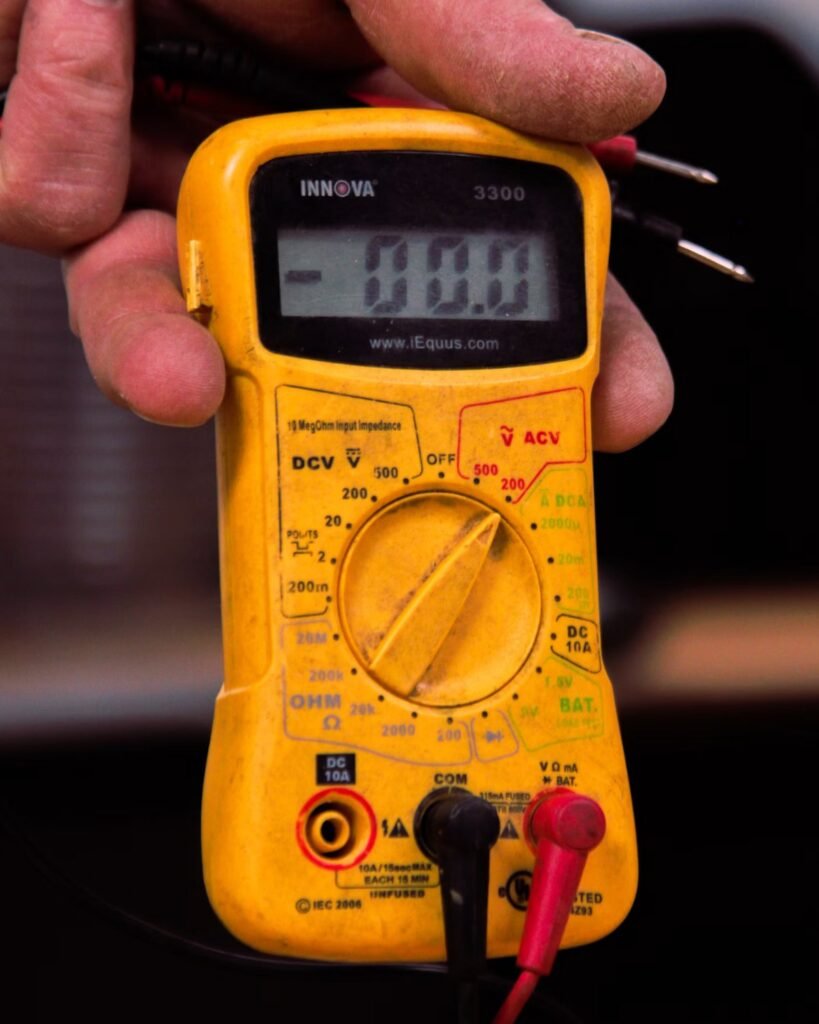
- Engine off: set the multimeter to DC volts and touch the red probe to the positive (+) terminal and the black probe to the negative (-) terminal. A healthy, fully charged battery reads about 12.6 volts. Around 12.2 volts is half-charged, and anything under 12 volts means the battery is low or failing.
- Engine running: start the car and test again. You should see roughly 13.7 to 14.7 volts. That tells you the alternator is charging.
- Under load: with the engine still running, switch on the headlights, AC and rear defroster. The reading should stay above about 13 volts.
- Look and listen: inspect the belt for cracks or looseness, and check the terminals for corrosion or movement when you gently wiggle them.
If voltage barely changes when the engine is running, or drops below 13 volts under load, the alternator or regulator is the likely problem. If the running voltage climbs above about 15 volts, the regulator is probably overcharging.
Easy Fix: Cleaning Corroded Battery Terminals
If you see crusty buildup, cleaning the terminals often makes the light disappear for good. Wear gloves and eye protection, then:
- Turn the engine off and remove the key.
- Disconnect the negative (-) cable first, then the positive (+).
- Scrub the posts and clamps with a mix of baking soda and water using an old toothbrush or terminal brush.
- Rinse with a little clean water, then dry thoroughly.
- Reconnect the positive cable first, then the negative, and tighten both clamps snugly.
- Optional: apply a thin layer of petroleum jelly or terminal protector spray to slow future corrosion.
Can You Drive With the Battery Light On?
Short answer: only as far as you need to get somewhere safe. When the alternator stops charging, the car is living on borrowed time. As the battery drains, you may lose power steering assist (on electric systems), the headlights may dim, and eventually the engine will stall, possibly in traffic.
If the light came on along with a temperature warning, a loud squeal followed by silence, or a burning smell, stop as soon as it’s safe and don’t keep driving.
How Much Does It Cost to Fix?
Costs vary by vehicle and location, but here are typical ballpark ranges in the US:
| Repair | Typical cost (parts + labor) |
|---|---|
| Clean battery terminals | Free (DIY) to about $50 |
| New serpentine belt | About $100 to $250 |
| New car battery | About $120 to $300 |
| Alternator replacement | About $400 to $1,000+ |
| Wiring or ground repair | About $100 to $400 |
Getting a free charging-system test first can save you from replacing a good battery when the real problem is the alternator, or vice versa.
How to Prevent the Battery Light From Coming On
- Have your battery tested once a year after it turns three years old.
- Keep the terminals clean and tight.
- Ask your mechanic to check the serpentine belt at every oil change. If you’re due for one, our guide on how to check the oil level in your car is a good habit to pair with a quick belt check.
- Avoid long periods of short trips, which don’t give the alternator enough time to recharge the battery.
- Don’t run lots of accessories with the engine off.
Frequently Asked Questions
Does the battery light mean I need a new battery?
Not necessarily. Most of the time it points to the charging system, usually the alternator or belt. Test before you buy a new battery.
Why does my battery light come on and then go off?
An intermittent light usually means a loose connection, a slipping belt or an alternator that’s starting to fail. It’s an early warning, so get it checked before it becomes constant.
Can a bad battery cause the battery light to come on?
Yes. A battery with a dead cell or very low charge can pull system voltage down enough to trigger the light, especially right after starting.
How long can I drive with the battery light on?
Usually somewhere between 20 minutes and an hour, depending on your battery’s condition and how many electrical accessories you’re using. Treat it as a “get to safety” window, not a reason to keep running errands.
Final Thoughts
A battery light on in car is your vehicle asking for attention, not a reason to panic. Cut the electrical load, watch your other gauges and get the charging system checked soon. In many cases, the fix is simple: a loose belt, a dirty terminal or a tired battery. Catching it early is what keeps a small repair from turning into a tow.